
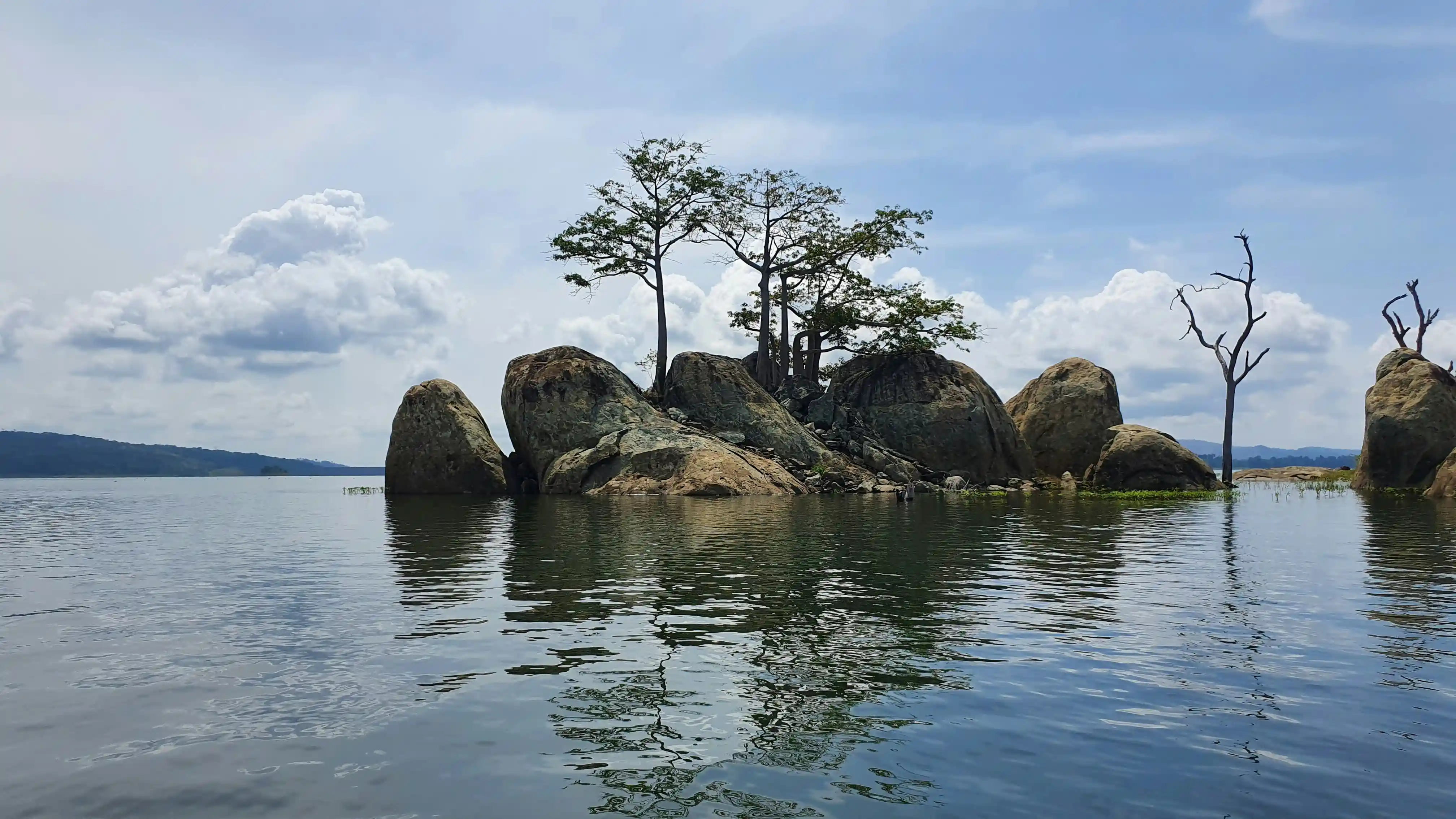
Côte d'Ivoire is an African destination on the rise as a tourist hotspot. With nearly 25 million inhabitants, the country welcomes around 2 million visitors each year. Its natural landscapes are extraordinary: Taï National Park, a UNESCO World Heritage Site, and the fascinating Senufo tribe, one of the last indigenous communities in Africa, are just two examples of its rich cultural and natural heritage.
Its beaches rank among the most stunning on the continent. Those of Grand Bassam, the former colonial capital and also a UNESCO World Heritage Site, impress visitors with their blue starfish and oceanfront resorts. Meanwhile, Abidjan and Yamoussoukro blend modernity and urban life in a setting that is a must for any traveler. Côte d'Ivoire remains one of Africa's least explored destinations, making it a unique opportunity for authentic tourism.
Do you need a visa to travel to Côte d'Ivoire?
Yes, most nationalities need a visa to enter Côte d'Ivoire. The following nationalities are exempt from this requirement for stays of up to 90 days: Benin, Burkina Faso, Cape Verde, Central African Republic, Chad, Congo, Gambia, Ghana, Guinea-Bissau, Liberia, Mali, Mauritania, Morocco, Niger, Nigeria, Philippines, Senegal, Seychelles, Sierra Leone, Togo, and Tunisia.
All other citizens of the world must obtain a visa for Côte d'Ivoire before traveling. Depending on your nationality, you may be able to apply for an electronic visa or you may need to visit an embassy.
Check the eligibility checker to find out which option applies based on your country of origin.

Types of visas for Côte d'Ivoire
There are different visa types depending on the purpose of your trip:
Tourist visa
Designed for travelers visiting the country for leisure or tourism purposes. Valid for a maximum of 90 days.
Transit visa
Required when Côte d'Ivoire is a stopover and your final destination is another country. Valid for a maximum of 3 days.
Business visa
Valid for up to 90 days, this visa allows you to attend meetings or business activities but does not authorize you to work in the country.
Health or social affairs visa (NGO)
Valid for 90 days, this visa is required for those traveling for medical reasons (illnesses, surgical procedures, or consultations) as well as for volunteers and NGO workers.
Study or research visa
The duration depends on the length of stay authorized by the country based on the activity to be carried out. Supporting documentation is required: university enrollment confirmation or an invitation letter from the educational or research institution.
Long-stay visa
Allows you to reside in the country for up to one year.
Official or diplomatic visa
Valid for 90 days, this visa is reserved exclusively for guests of the Ivorian government, politicians, and official representatives.
How to apply for a Côte d'Ivoire visa
Tourist and business visas can be applied for in three different ways:
- eVisa (electronic visa): the fastest and most recommended option. It is processed online through the official Ivorian government portal or through specialized companies such as Visagov. It eliminates the need to visit an embassy or wait in lines at the airport.
- Visa on arrival: processed directly upon arrival at a Côte d'Ivoire airport. This is a valid alternative if your trip is organized with little lead time, though it is always preferable to arrive with an approved visa to avoid any complications.
- Embassy visa: required when your nationality or the purpose of your trip does not allow for either of the above options. Since the number of Ivorian embassies worldwide is limited, it is advisable to locate the nearest one to your place of residence well in advance.
Who needs a visa to enter Côte d'Ivoire?
Currently, the vast majority of travelers must obtain a visa to enter the country. Some neighboring nationalities are exempt from this requirement for stays of less than 90 days.
It should be noted that there are three countries whose citizens are not permitted entry into Côte d'Ivoire: Mauritania, Mali, and Sierra Leone.
Requirements to apply for a Côte d'Ivoire visa
The documentation required to apply for a visa includes:
- Passport valid for at least 6 months from the date of entry into the country.
- Yellow fever vaccination certificate (mandatory for entry).
- Flight documentation showing entry and exit dates.
- Invitation letter or proof of accommodation. It must be signed, stamped, and notarized by the landlord or host establishment. Download the copy of the invitation letter saved in the online application form.
- Credit card for payment of visa fees.
Can the visa be modified once it has been processed?
Once the application has been processed, no information on the visa can be modified. If an error is detected, a new application must be submitted with the corresponding fees paid again, with no possibility of a refund for the previous application.

How much does the Côte d'Ivoire visa cost?
The cost of the online tourist visa for Côte d'Ivoire is €73. For other visa types that cannot be processed online, you will need to contact the nearest Ivorian embassy or consulate.
How far in advance should you apply for the visa?
The standard processing time is between 5 and 7 business days, provided no additional information is required. It is recommended to start the process at least 20 to 30 days in advance of your travel date.
Borders and entry points to Côte d'Ivoire
Due to its geographic location, Côte d'Ivoire is accessible by air, sea, and land.
The most common route is by air, through its international airports:
- Abidjan International Airport (ABJ), 14 km from the capital.
- Bouaké Airport (BYK), 8 km from the country's second largest city.
- Korhogo Airport (HGO), located in the north, 11 km from the city.
- Man Airport (MJC), in the west of the country, 15 km from the city of Man.
- San Pedro Airport (SPY), on the western coast, 5 km from the city.
- Odienné Airport (KEO), in the northwest of the country.
Sea access is through the Port of Abidjan, a cruise ship stopover point, and Port of San Pedro.
The authorized land border crossings are:
- Guinea – Côte d'Ivoire
- Liberia – Côte d'Ivoire
- Mali – Côte d'Ivoire
- Ghana – Côte d'Ivoire
- Burkina Faso – Côte d'Ivoire (not recommended for security reasons)
Regardless of the entry point, it is essential to present an approved and valid visa along with all required documentation. Crossing the border with Burkina Faso is strongly discouraged due to the political instability in the area.
What vaccines are needed to travel to Côte d'Ivoire?
The yellow fever vaccine is mandatory to enter the country: entry is not permitted without the vaccination certificate. Additionally, the following vaccines are recommended: tetanus, hepatitis A and B, cholera, typhoid fever, polio, rabies, and meningococcal disease. It is advisable to visit an international vaccination center before your trip for personalized guidance.
What is the currency of Côte d'Ivoire?
The official currency of Côte d'Ivoire is the West African CFA franc (XOF), shared by eight countries in the region. Euros and dollars can be exchanged at banks and currency exchange offices in tourist areas. It is recommended to always carry cash, as credit card use is not widespread.

What is the best time to visit Côte d'Ivoire?
The southern part of the country has a tropical climate, while the north is more semi-arid. There are two well-defined seasons: the dry season (December to February) and the rainy season (April to October). Generally speaking, the country maintains an average temperature of around 86°F (30°C) for most of the year.
Is it safe to travel to Côte d'Ivoire?
Côte d'Ivoire is a relatively safe destination, though it is always advisable to take extra precautions. The safest and most tourist-friendly areas are Abidjan, San Pedro, and Yamoussoukro. Areas near active border conflict zones should be avoided.
Its beaches are spectacular, but caution is advised when swimming due to the strength of the waves. On the other hand, coastal resorts offer safe conditions for visitors.
Travel tips for Côte d'Ivoire
Before you depart, make sure all your documentation is in order: a printed visa and payment receipt, as both documents will be requested at border control.
- Vaccination record: proof of vaccination is required for entry into the country, especially the yellow fever vaccine.
- Passport: must be carried at all times during the trip.
- Travel health insurance: not mandatory, but strongly recommended.
- Mosquito repellent: essential for preventing insect-borne diseases.
- Water and food: drink bottled water only and avoid food from street vendors.
- Dress code: dress is conservative in most of the country, though coastal areas like Abidjan or San Pedro have a more casual atmosphere.
- Local crafts: African masks and traditional ceramics are the most representative souvenirs of Ivorian culture.
