
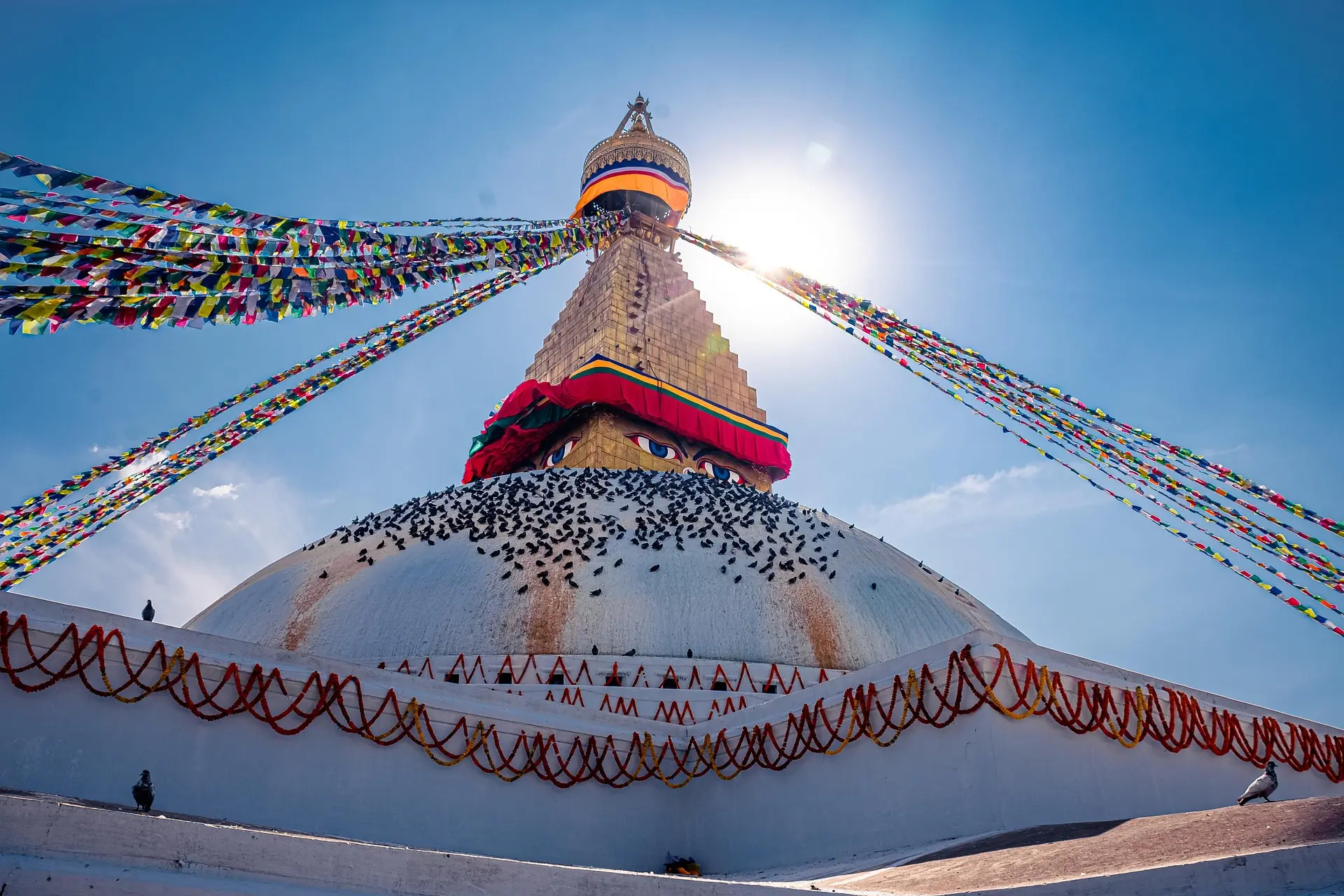
Nepal is a small country nestled between India and Tibet, in the heart of Asia. Traveling to Nepal is the dream of many adventurers and mountaineers, as it is home to the Himalayas and Everest, the highest peak in the world. But this extraordinary country also offers a profound spiritual dimension: temples, stupas and monasteries await those seeking contemplation and inner peace.
If you are planning a trip to Nepal (whether to meditate, go trekking or climb its legendary summits), in this article you will find all the updated information on the entry requirements for Nepal.
Entry requirements for Nepal
Passport
To enter Nepal you need a passport valid for at least 6 months from the date of arrival. In addition, the document must have at least 3 blank pages for entry stamps.
Exception: Indian citizens may travel to Nepal with any valid identity document, without the need for a passport.
Visa for Nepal
Most travelers, except Indian nationals, need to obtain a visa for Nepal before or upon arrival. Through Visagov you can handle the process conveniently and hassle-free, regardless of your entry point into Nepal. If you want to learn about the process step by step, check out our guide on how to get a visa for Nepal. There are two options:
- Electronic visa for Kathmandu airport, TIA: if you enter through Tribhuvan International Airport (TIA), you can apply for your e-visa in advance through Visagov. You will arrive with everything ready and only need to present your documents at immigration control, with no unnecessary waiting.
- Pre-registration: if you enter through one of the eight land border crossings from India or Tibet, or through airports other than Kathmandu, Visagov offers an optional but highly recommended pre-registration. Upon arrival, you will only need to pay the fees to obtain your visa, avoiding the usual queues at the border.
The visa for Nepal is available for stays of 15, 30 or 90 days, depending on your travel needs.

Vaccines and health
Among the entry requirements for Nepal, vaccination deserves special attention. We recommend consulting your doctor or visiting a travel medicine clinic at least 4 to 6 weeks before your trip.
The only mandatory vaccine is yellow fever, but only if you are arriving from an endemic country. In addition, vaccination against hepatitis A, typhoid fever and rabies is recommended, especially if you plan to go trekking or visit rural areas. Depending on the time of year and the type of trip, the Japanese encephalitis vaccine may also be advisable.
Although it is not an official requirement, taking out travel insurance for Nepal is highly recommended. Local healthcare has limited coverage and can be costly. If you plan to go trekking in the Himalayas or high-altitude mountaineering, medical insurance with rescue coverage is practically essential.
For a complete guide on all recommended vaccines before traveling to Nepal, see our article: Vaccines for traveling to Nepal.
Currency and cash
The official currency of Nepal is the Nepalese rupee (NPR), divided into 100 paisa. You can exchange money at the airport or in Kathmandu, the country's capital.
If you plan to go trekking or mountaineering, always carry cash, preferably in small-denomination bills and coins. ATMs are scarce outside cities and power outages can put these services out of operation.
