
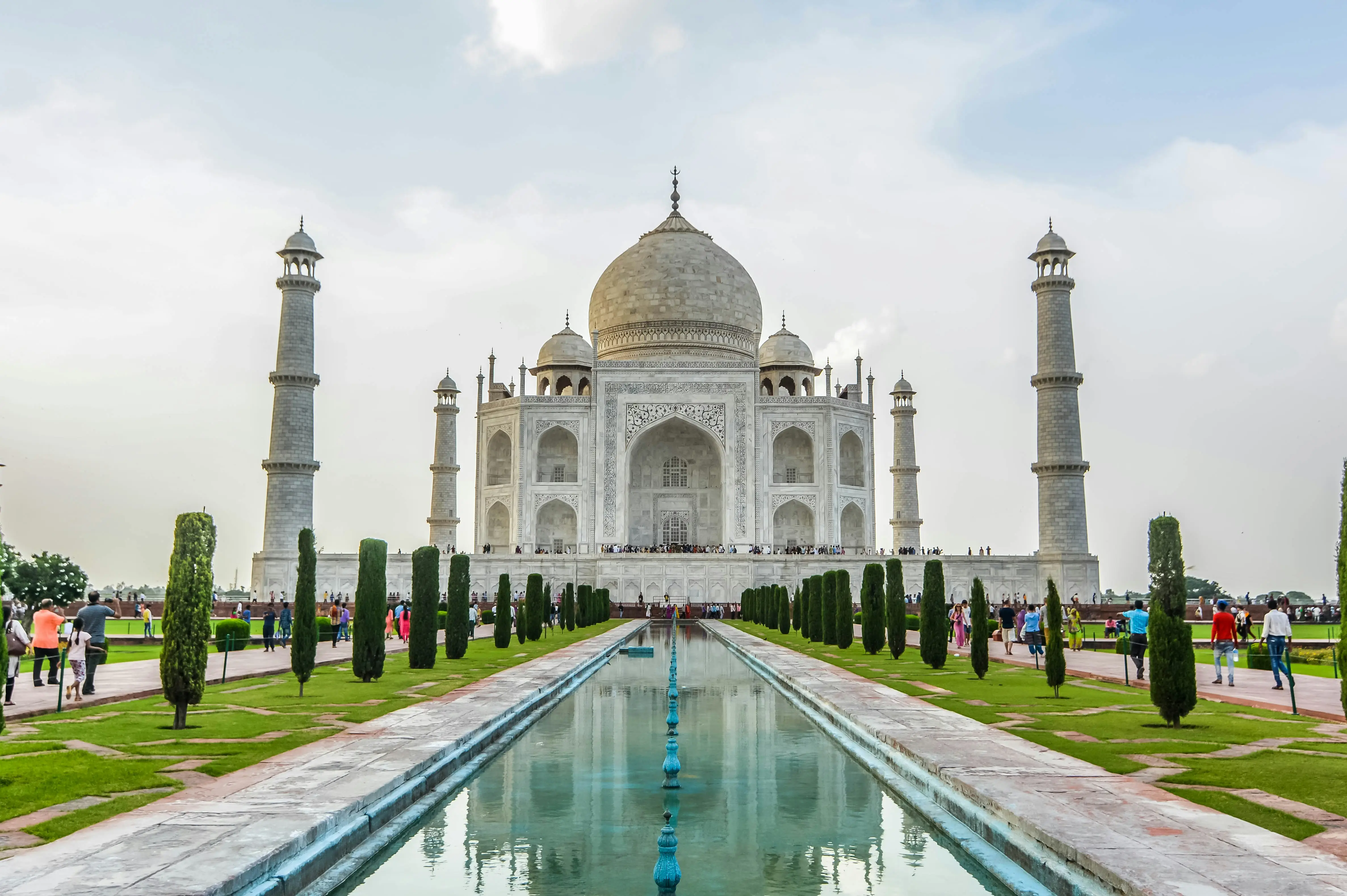
India has been the world's most populous country since April 2023, with more than 1.425 billion inhabitants according to UN estimates, and one of the most fascinating tourist destinations on the planet. Home to the Taj Mahal in Agra, one of the seven wonders of the modern world, and one of the oldest civilizations in history, traveling to India is a unique experience that requires careful documentation preparation. Here you will find everything you need to know about the India visa: types, requirements, costs, and 2026 updates.
Is a Visa Required to Travel to India?
Yes. A visa is mandatory to enter India for virtually all nationalities. The only exceptions are citizens of Bhutan, Nepal, and the Maldives, who enjoy exemptions under specific conditions.
For all other nationalities, the most convenient and common option is the e-Visa (electronic visa for India), which can be processed entirely online. The most requested options for short and medium-length trips are:
- 30-day e-Tourist Visa: ideal for short stays, with double entry.
- 1-year and 5-year e-Tourist Visa: for multiple entries on long-term or frequent trips.
You can verify your eligibility and specific requirements based on your nationality before starting the application.
2026 Update: The Electronic Arrival Card (e-Arrival Card)
As of April 1, 2026, all foreign travelers entering India must complete an electronic arrival card (e-Arrival Card) before their flight. Paper disembarkation cards have been permanently eliminated.
This card does not replace the visa: it is an additional arrival declaration document that must be completed up to 72 hours in advance. It is free and mandatory for all passengers with a foreign passport, including holders of the OCI (Overseas Citizen of India) card. The only exemptions are Indian citizens.

Types of India Visa
Depending on the purpose and length of your trip, you will need to select one of the following categories. Since December 2025, the timeframe for applying for the e-Visa has been extended: it is now possible to apply up to 120 days before the arrival date.
Electronic Visas (e-Visa)
e-Tourist Visa
The most common option for leisure travel, family visits, or recreational activities. It comes in three options:
- 30-day e-Tourist: double entry, non-extendable and non-convertible.
- 1-year e-Tourist: valid for 365 days from the date of issue with multiple entries. Also valid for short-term yoga courses.
- 5-year e-Tourist: valid for five years with multiple entries.
In all options, each visit may not exceed 90 consecutive days. Nationals of the USA, UK, Canada, and Japan may extend their continuous stay up to 180 days.
e-Business Visa
For business purposes. It has a one-year validity with multiple entries and a maximum continuous stay of 180 days. If this period is expected to be exceeded, registration with the FRRO (Foreigners Regional Registration Office) is mandatory. Valid reasons include:
- Establishing businesses or industrial enterprises.
- Buying, selling, or trading goods.
- Attending technical meetings, trade fairs, or exhibitions.
- Recruiting staff or participating as a specialist in projects.
- Lectures under the GIAN initiative or sports activities.
e-Conference Visa
Specifically for attending conferences organized in India. Maximum duration of 30 days from entry, single entry, and requires an invitation letter from the organizers. If the conference is an internal event of a private company, a business visa must be applied for instead.
Medical Visas (e-Medical)
- e-Medical: for those traveling to receive medical treatment in India. Validity of 60 days and up to three entries.
- e-Medical Attendant: for accompanying a patient undergoing treatment. Same validity as the main medical visa. A maximum of two attendants per patient is allowed.
Visas Processed at an Embassy or Consulate
Tourist Visa
For vacations, family visits, weddings, or other leisure purposes. The embassy generally issues a visa valid for up to 6 months. If a different duration is desired, it must be specified on the application form.
Business Visa
Allows entry into the country for commercial activities such as finding clients or suppliers, attending trade fairs, managing human resources, business meetings, or providing technical support to Indian companies. Available in 3-month, 6-month, or 1-year options. Foreigners wishing to work and reside in India as expatriates must apply for an employment visa.
Employment Visa
For foreigners hired by an Indian company or institution based in the country. Generally issued for 1 year or the duration of the contract, with the possibility of extension for up to 5 years. If the stay exceeds 180 days, registration with the FRRO within the first 14 days of arrival is mandatory.
Student Visa
For those wishing to pursue accredited studies at institutions recognized by the Government of India. Granted for the duration of the academic program, up to a maximum of 5 years. It allows undergraduate and postgraduate studies, exchange programs at universities or Indian Institutes of Technology (IITs), and yoga or Indian culture courses at accredited institutions. Required documentation: official admission letter from the educational institution and proof of financial means.
Intern Visa
Ideal for young professionals seeking work experience in the Asian market before or after graduating. It can be applied for during studies or within one year after graduation. This visa cannot be directly converted into an employment visa within India; a new application from the home country is required at the end of the period.
Entry Visa
Designed for situations involving family or patrimonial ties with India. It is not a tourist visa, but rather a long-stay permit intended for people of Indian origin, spouses and children of Indian citizens, and dependents of employment, business, or research visa holders.
Journalist Visa
For media professionals traveling to carry out their work or for tourism in a professional capacity. It has a minimum processing time of 15–20 days, so it is recommended to start the process well in advance.
Film Visa
For entertainment industry productions wishing to film on Indian territory. It requires prior approval from the Ministry of Information and Broadcasting of India and a detailed list of the technical crew and planned locations.
Transit Visa
Required if a layover in India involves leaving the international area of the airport or changing terminals. It has a validity of 15 days from issuance, allows up to 2 entries with a maximum stay of 72 hours per visit. Confirmed onward tickets to a third destination must be presented.
Research Visa
For high-level academic profiles. The research topic must be approved by the relevant authorities and may require an invitation letter from the host organization.
Project Visa
A specific technical visa for the execution of large-scale contracts or engineering projects requiring specialized foreign personnel in strategic sectors.
Visa Transfer
An administrative service required when a passport is renewed but the current visa is in the old document. It allows the legal validity of the visa to be transferred to the new passport to avoid issues at immigration controls.
Diplomatic and Official Visa
Exclusively for holders of diplomatic or service passports traveling on official missions or posted to diplomatic missions in India.

How to Apply for an India Visa
Most travelers can manage their entry to India conveniently through the electronic visa (e-Visa) system. The application can be processed through the official Indian government website or through a specialized service such as Visagov.
The government website requires filling out lengthy forms in English and personally managing document uploads with very specific technical requirements regarding format, size, and resolution. Processing through Visagov offers clear advantages:
- Forms available in Spanish.
- Personalized assistance 7 days a week.
- Human review of each application to correct any errors before it reaches the Indian authorities.
For certain special permits or long-term visas (such as some residence visas or specific project visas), it is still necessary to visit the nearest consulate or embassy in person.
Who Needs to Apply for a Visa to Travel to India?
Visa-Exempt Countries
Only citizens of Nepal, Bhutan, and the Maldives (the latter for tourist stays of up to 90 days) can enter India without a prior visa.
Diplomatic and Official Agreements
Holders of diplomatic, official, or service passports from the following countries do not need a visa for short stays (generally up to 90 days):
- Americas: Argentina, Brazil, Chile, Colombia, Mexico, Paraguay, Peru, and Uruguay.
- Oceania: Cook Islands, Fiji, Marshall Islands, Micronesia, Nauru, Niue, Palau, Papua New Guinea, Samoa, Solomon Islands, Tonga, Tuvalu, and Vanuatu.
- Asia and Africa: Indonesia, Myanmar, Mauritius, Seychelles, and South Africa.
Important note: if you are traveling with a regular passport (tourist or business), the exemption does not apply and you will need to obtain a visa through the standard process, preferably through the e-Visa system.

Requirements to Apply for an India Visa
General Requirements (Mandatory for All Visas)
- Valid passport with a minimum validity of 6 months from the expected date of entry, and at least 2 blank pages.
- Recent passport-style photo: color image with a plain white background, neutral expression, eyes open, and no accessories covering the face (except for religious reasons).
- Email address to receive the approved travel authorization.
- Debit or credit card enabled for international transactions to pay the fees.
Specific Requirements by Visa Type
- Business Visa (e-Business):
- Scanned business card.
- Invitation letter from the company or organization in India, detailing the purpose and duration of the visit.
- Medical Visa (e-Medical):
- Official letter on the letterhead of the medical center in India.
- Conference Visa (e-Conference):
- Official invitation from the event organizer in India.
- Political clearance from the Ministry of External Affairs (MEA) and security clearance from the Ministry of Home Affairs (MHA) of the Government of India.
At Visagov, we take care of adjusting your files to the exact technical parameters, ensuring that the application is processed without errors.
Can the India Visa Be Modified Once Issued?
No. Once processed and issued by the Government of India, the visa cannot be modified in any way. The data contained in the document (passport number, name, dates, or visa type) are final.
Any error, no matter how small, may result in being denied boarding or rejection by immigration authorities upon arrival. If an inconsistency is detected in an already approved visa, the application process must be started from scratch, incurring the management fees and government taxes again, as the Government of India does not issue refunds for applicant errors.
At Visagov, we manually review every piece of data and documentation before submitting the application to the Indian authorities. If we detect a discrepancy, we correct it immediately to ensure the final visa is accurate and to prevent the traveler from having to pay twice.
How Much Does an India Visa Cost?
There is no single fee. The final cost depends mainly on three factors: the traveler's nationality, the type of visa, and its duration. Since 2026, India has applied a reciprocal pricing model in which fees are aligned with what each country charges Indian citizens.
The approximate government fees for the most common options are:
- e-Tourist Visa (30 days): between $10 and $25 USD depending on nationality.
- e-Tourist Visa (1 year): around $40 USD.
- e-Tourist Visa (5 years): approximately $80 USD.
- e-Business / e-Medical Visa: from $80 USD (may vary by nationality).
When processing your visa through Visagov, the final cost includes both the official government fee and the professional management fee, which covers expert document review, 24/7 support in Spanish, and handling of any additional requests from the Indian government.

How Far in Advance Should You Apply for an India Visa?
It is recommended to apply for the visa at least 15 days before your trip. Applications with less than 4 business days notice are not accepted. Depending on the nationality and visa type, the process usually takes between 3 and 8 business days.
Thanks to the extension approved in December 2025, it is now possible to apply for the e-Visa up to 120 days before the arrival date, allowing for much more advance trip planning.
What Are India's Entry Borders?
With an electronic visa (e-Visa), entry into the country is only permitted through selected airports and seaports.
Authorized International Airports
- Major airports: Delhi, Mumbai, Chennai, Kolkata, Bengaluru, and Hyderabad.
- Tourist and regional destinations: Jaipur, Goa (including Mopa Airport), Cochin, Thiruvananthapuram, Ahmedabad, Amritsar, Lucknow, Varanasi, Gaya, and Trichy.
- Other authorized points: Calicut, Mangalore, Pune, Nagpur, Coimbatore, Bagdogra, Guwahati, Chandigarh, Visakhapatnam, Madurai, Bhubaneswar, Kannur, Indore, and Port Blair.
Seaports
e-Visa access is restricted to the country's 5 main ports: Mumbai, Cochin, Mormugao (Goa), Chennai, and New Mangalore.
Is a Visa Required for a Layover in India?
A transit visa will only be required if:
- The layover exceeds 24 hours.
- You plan to leave the airport, even for just a few hours.
- You need to collect your luggage and re-check it for a different connecting flight (especially with low-cost airlines or separate tickets).
If the layover is solely to connect flights and you remain in the international area of the airport, no visa is required.
