
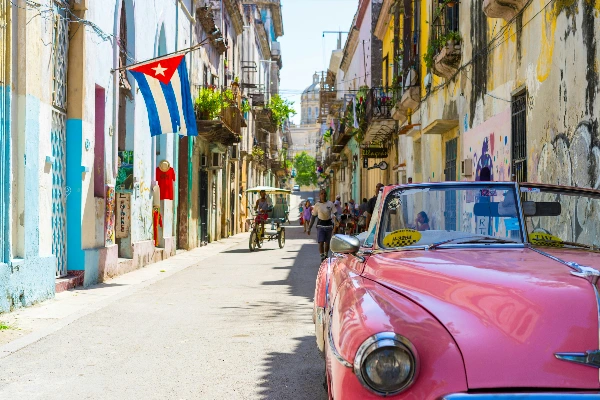
Cuba is an island country located in the Caribbean Sea, very close to the United States and Mexico. With its wonderful white-sand beaches, colorful colonial houses, and classic cars that are a real highlight for visitors, there are plenty of things to see in Cuba.
This island is an iconic Caribbean destination thanks to its mix of history, culture, and beaches, but before you travel it’s worth understanding the entry requirements. For most travelers, the main step is the Cuba visa (tourist eVisa), as well as the D’Viajeros form, which generates a QR code that is requested when you enter the country.
Do you need a visa to travel to Cuba?
Yes. To travel to Cuba as a tourist, you need a tourist visa (Cuba eVisa), except in specific cases where an exemption applies due to nationality or residency status. Since late June 2025, the tourist eVisa has become the mandatory requirement to enter Cuba for tourism. In addition to the visa, Cuba requires you to travel with a valid passport (with a minimum validity of 6 months from the date of entry), travel insurance with medical coverage, a round-trip ticket, and the QR code from the D’Viajeros form.
You can check our eligibility checker to see the specific requirements for your nationality.

eVisa for Cuba
For most travelers, the most common option is the tourist visa (eVisa), valid for a single entry and a stay of 90 days, extendable for an additional 90 days. The eVisa is electronically linked to your passport, and the system usually confirms the decision within up to 72 business hours.
If the trip is not for tourism (for example, studies, work, residence, a long stay, or other reasons), it’s recommended to apply for the appropriate visa through the embassy/consulate or via the channel you are instructed to use, as requirements vary depending on the purpose of travel.
Where to get the eVisa for Cuba?
A highly recommended option is through Visagov. We offer the complete process together with the D’Viajeros form and provide the option to choose travel insurance with us, without having to complete separate procedures.
Who needs a visa for Cuba?
In practice, most foreign tourists need a visa to travel to Cuba. If you are traveling for tourism, the usual process is to apply for the Cuba eVisa (tourist visa) and, in addition, complete the D’Viajeros form to obtain the QR code that you present upon arrival. The exact requirements may vary depending on nationality and the type of trip, so it’s best to check before booking or flying.
Some nationalities have visa-exemption agreements. For example, Cuba’s official tourism portal indicates that Chinese citizens are exempt from the visa requirement to enter the country with an ordinary passport. As these agreements may change, if your passport is not Spanish/EU or you have doubts, the safest approach is to confirm it using an airline requirements checker (IATA Travel Centre / Timatic) or with the relevant consulate.
There are also traveler profiles for which the tourist eVisa may not be sufficient or may not be the applicable channel (for example, travel for studies, work, residence, or other reasons). In those cases, it’s recommended to apply through consular channels and follow the documentation you are instructed to provide, as it is not the same procedure as a tourist visa.
Some nationalities may need to apply through a consulate even when traveling for tourism, while others may be exempt under bilateral agreements. For that reason, before starting the process, confirm the exact requirement based on your passport and your route (airline + IATA/Timatic or the consulate).
What requirements are needed to apply for a visa to Cuba?
To apply for the tourist visa for Cuba (Cuba eVisa), the essentials are having a valid passport and an active email address, since the visa is linked to your passport and the system sends the visa code to your email. To avoid issues, make sure your name and passport number are written exactly as they appear on the document. In addition to the visa, to travel to Cuba you will usually be asked for: a valid passport (with at least 6 months validity from the date of entry), medical insurance, a round-trip ticket, and the QR code from the D’Viajeros form, which is mandatory for entry.

Do you need a visa to transit in Cuba?
It depends on the layover. If the connection is international and you remain in the airport’s transit area without passing through immigration control, in many cases you do not need to obtain a tourist visa; however, conditions may vary depending on nationality, airline, route, and ticket type, so the most prudent option is to confirm with the airline before traveling. On the other hand, if you need to leave the airport, collect luggage, stay overnight outside, or any situation that involves entering the country, it’s recommended to have the Cuba eVisa arranged in advance and to complete D’Viajeros to obtain the entry QR.
Can the visa be modified after it has been processed?
In general, no. The Cuba eVisa is associated with your passport, so if there is an error in the details (name, passport number, etc.), you will typically need to apply for a new eVisa with the correct information. That’s why it’s important to carefully review your details before submitting the application.
What is the price of the visa for Cuba?
The price of the visa for Cuba may vary depending on the consular office and the application channel. As a reference, some Cuban consular offices in Spain publish a fee of €22.00 for the tourist visa/eVisa. In any case, the exact amount may change, so it’s best to confirm it through the official channel or at the time of payment.
If you apply for the Cuba eVisa through Visagov, that €22.00 corresponds only to the consular/government visa fees. Our processing fee is added to the final amount, covering the application handling, medical insurance if selected, data review, and support throughout the process (the total is itemized before you complete payment).
How far in advance should you apply for the Cuba visa?
Although the official Cuba eVisa system indicates that you will normally receive a response within the next 72 business hours, it’s best to apply for the tourist visa for Cuba well in advance (ideally, 2 weeks before your trip). This helps avoid setbacks if there are payment issues, passport data errors, or a need to provide additional information.
What are the ports of entry to Cuba?
Cuba allows entry both by air and by sea. For most travelers, the most common way to arrive is by plane, as the country has a broad airport network and also several sea entry points for cruises and recreational vessels. Before traveling, it’s worth checking that you have all entry documentation in order (passport, visa, and other current requirements), as it may be requested both at boarding and upon arrival.
According to official tourism information, Cuba has 10 international airports: Havana (José Martí International Airport / Boyeros), Cayo Largo (Vilo Acuña), Varadero (Juan Gualberto Gómez), Camagüey (Ignacio Agramonte), Holguín (Frank País), Santiago de Cuba (Antonio Maceo), Santa Clara (Abel Santamaría), Cienfuegos (Jaime González), Cayo Coco (Jardines del Rey), and Manzanillo (Sierra Maestra). The busiest is usually José Martí International Airport in Havana, the main gateway for international flights.

