
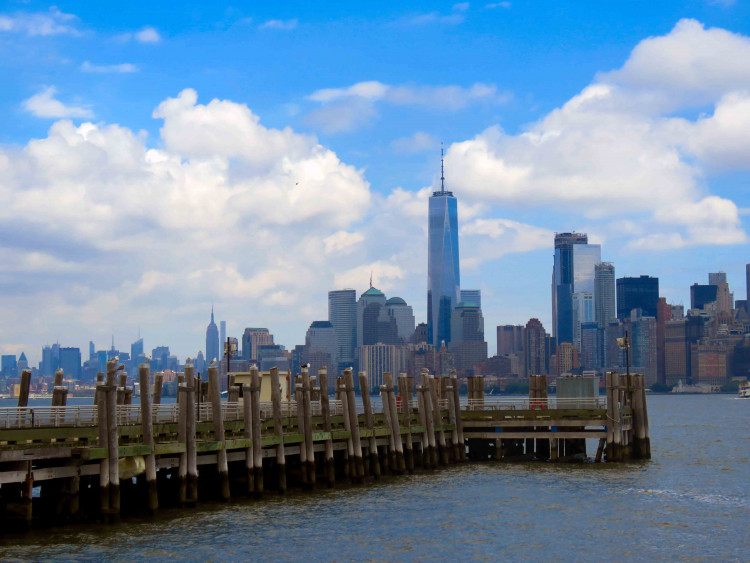
New York City is the most populous city in the United States and, year after year, solidifies its position as the country's most visited destination. With tens of millions of travelers roaming its streets annually, the "Capital of the World" offers an energy found nowhere else on the planet.
If it is your first time landing in this spectacular metropolis, the ideal stay is between 7 and 10 days. While there is no set time to know it completely, we recommend making a list of your must-sees and drafting a flexible itinerary to optimize your days. Known as "the city that never sleeps," New York lives up to its nickname in every sense: it is vibrant, loud, and chaotic, yet it possesses a magnetism that will make you want to return again and again.
Entry Requirements: The ESTA Visa for the United States
Before you start dreaming of skyscrapers, it is essential to secure your entry into the country. To travel to any American city as a tourist, it is mandatory to process a travel authorization known as ESTA.
This permit is valid for 2 years, allowing you to reuse it for future getaways if you decide to return before it expires. Although the process can be attempted individually, government platforms are often rigid, and any small data error can halt your plans.
At Visagov, we specialize in visa and authorization management. We ensure your application is professional and correct, giving you the peace of mind that your documentation is in expert hands. If you want to dive deeper into the technical details, we invite you to consult our complete guide on visas and requirements for traveling to the United States.
Upon landing, security control will ask for your travel authorization (ESTA), which must be approved before boarding your flight, along with your passport. Once verified, the American dream begins!
What is the best time to travel to New York?
New York is always full of life, and each season offers a distinct experience:
- Fall: Earthy tones take over Central Park, and temperatures are perfect for walking.
- Winter: Although the cold is intense, the holiday decorations and snow turn it into a magical setting.
- Spring: The days get longer, and the city blooms after the harsh winter.
- Summer: High temperatures and very long days to enjoy outdoor activities until late.
The Great Icons of the City: Liberty and History
There are places that define the New York skyline and are mandatory visits:
The Statue of Liberty and Ellis Island
The ultimate symbol of freedom. You can take the ferry from Battery Park to see it up close and learn the history of the immigrants who passed through Ellis Island.

The Staten Island Ferry
Expert Tip: If you want to enjoy a spectacular view of the Statue of Liberty and the Financial District skyline completely for free, take this ferry. It offers incredible photos at no cost.

Empire State Building
The most famous skyscraper in the world. With its Art Deco architecture, its observatories on the 86th and 102nd floors are the heart of Manhattan.

Times Square
The nerve center of neon lights and Broadway musicals. Here, you feel the most frantic pulse of the city.

The Best Observatories: New York from the Clouds
To understand the scale of the city, you must ascend one of its iconic observatories:
- Top of the Rock: At Rockefeller Center, it offers the best panoramic view of Central Park and the Empire State Building.
- One World Observatory: Located at the World Trade Center, it is the highest point in the city.
- The Summit at One Vanderbilt: An immersive mirror experience that has revolutionized the skyline.

Neighborhoods with Identity: Exploring Diversity
Every New York neighborhood has its own cultural "microclimate":
- SoHo and Chinatown: SoHo stands out for its cast-iron buildings, while Chinatown transports you to Asia with its markets.

- Wall Street and Ground Zero: The financial center where the Wall Street Bull and the solemn 9/11 Memorial are located.

- The Oculus: The station designed by Santiago Calatrava that mimics a bird taking flight.

- Harlem and the Bronx: Multicultural neighborhoods full of history. In Harlem, a Gospel mass is a must-see, and in the Bronx, visit Yankee Stadium.


Culture, Museums, and Parks
- Central Park: The green lung. The best way to explore it is by renting a bike.

- Museums: The MoMA (modern art) and the Public Library are mandatory cultural stops.

- Brooklyn Bridge: A walk of nearly two kilometers with the most romantic views of the skyline at sunset.

Experiences Beyond Skyscrapers
If you are looking for a retro American atmosphere, Coney Island is the place for you. Its beach and the famous Luna Park amusement park will make you feel like you are in another era.

Practical Tips for the Traveler
- Transport: With the OMNY system, you can pay for the subway directly with your contactless card or phone (approx. 3 USD per trip).
- Planning: New York is wonderful but noisy and chaotic. Have patience and enjoy its unique energy.
New York is a wonderfully chaotic, noisy, and special city. Make sure to have your documentation ready with Visagov and prepare for an experience you will want to repeat.