
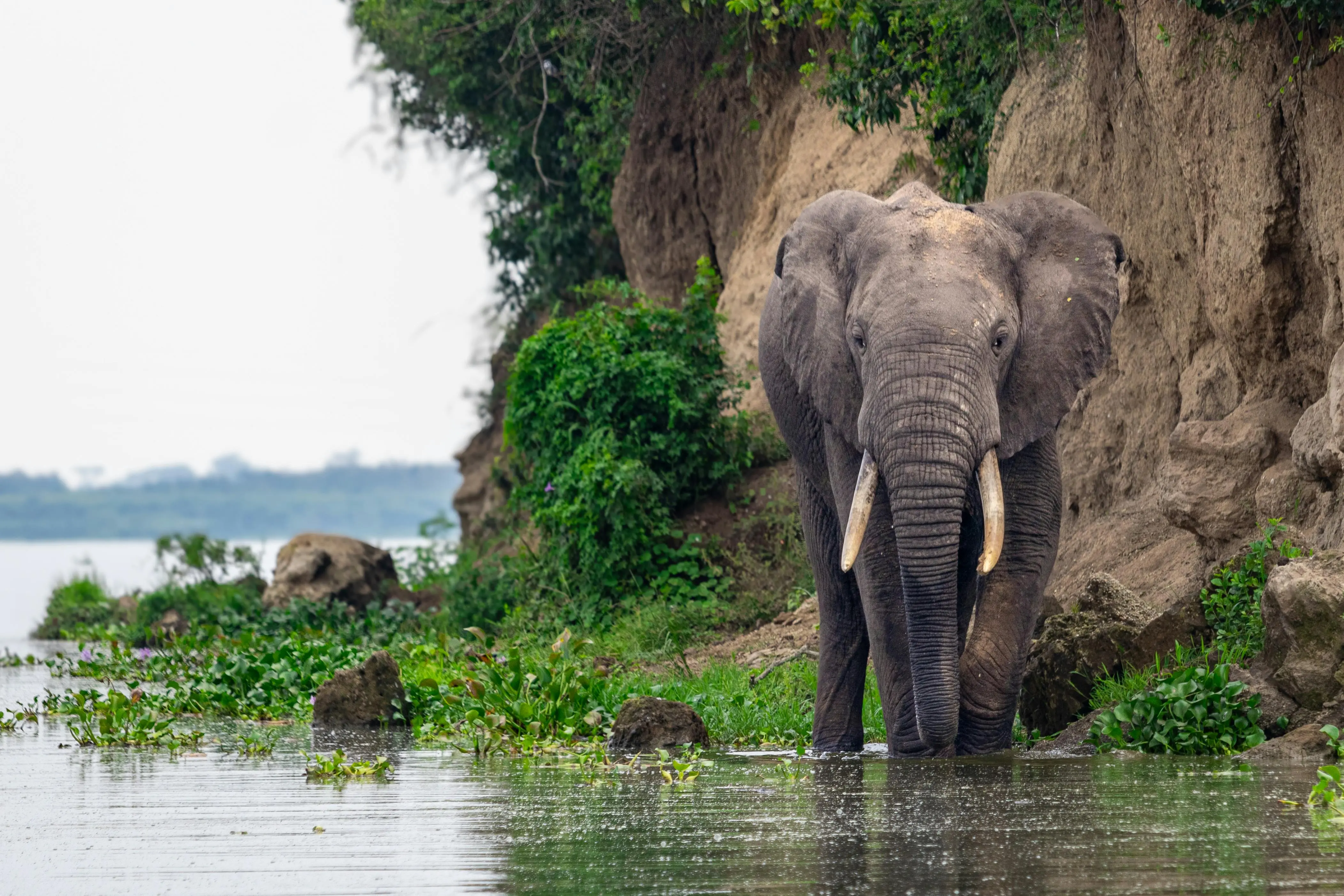
Uganda is a country full of majestic mountains, impressive waterfalls, and wild nature that characterizes East Africa in its purest form. Surrounded by imposing elevations that favor both biodiversity and agricultural activity, Uganda offers travelers a variety of experiences that are hard to find in any other destination on the continent.
From mountain gorilla trekking to having breakfast with views of lions in Queen Elizabeth National Park, Uganda's attractions surprise those who arrive without quite knowing what to expect. Below you'll find the must-see places in Uganda.
Before starting your adventure in Uganda, remember that most nationalities need a visa to enter the country. You can apply for your Uganda visa online quickly and easily, without queues or trips to an embassy, at Visagov.
Bwindi Impenetrable National Park: the mountain gorilla sanctuary
Bwindi National Park is one of the most highly regarded destinations for travelers visiting Uganda. Declared a UNESCO World Heritage Site, it is home to more than half of the world's mountain gorilla population, making it one of the few places on the planet where it is possible to observe these primates in their natural habitat.
In addition to the gorillas, the park boasts extraordinary biodiversity: more than 350 bird species, chimpanzees, elephants, and a dense tropical rainforest to explore by four-wheel-drive vehicle or on foot with a local guide. An experience that uniquely combines adventure, nature, and conservation.
Queen Elizabeth National Park: safari in the heart of Uganda
Queen Elizabeth National Park is the country's most visited natural area and one of the best safari destinations in East Africa. Its landscape of savanna, wetlands, and volcanic lakes is home to extraordinary wildlife: lions, hippos, elephants, buffalo, and more than 600 recorded bird species.
One of its most memorable experiences is the cruise along the Kazinga Channel, where animals can be seen coming to the shore at sunset. The park is also known for its tree-climbing lions, an unusual behavior that attracts photographers and naturalists from around the world.
Murchison Falls: the raw power of the Nile
Murchison Falls, located within the national park of the same name, is one of Uganda's most breathtaking natural spectacles. The Nile River narrows to just seven meters before plunging with extraordinary force, forming one of the most powerful waterfalls on the African continent.
The park surrounding them is Uganda's largest and is home to large populations of elephants, giraffes, hippos, and crocodiles. Nile cruises to the base of the falls are one of the most recommended activities for visitors to the area.

Lake Mburo: zebras, antelopes, and leopards in southern Uganda
Lake Mburo is a nature reserve managed by the Ugandan government and the only park in the country where it is possible to see zebras, impalas, and topis, as well as antelopes, warthogs, and leopards. Its smaller size compared to other parks makes it an ideal option for a one or two-day visit, especially for those traveling from Kampala toward the southwest of the country.
Available activities include vehicle safari, horseback riding, hiking, and boat trips on the lake, where hippos and water birds are abundant.
Bugungu Reserve: Ugandan wildlife in its wild state
The Bugungu Reserve, covering more than 500 square kilometers, forms together with the Karuma Reserve a natural corridor of great ecological value in northwestern Uganda. It is one of the best places to observe the region's characteristic wildlife in a less crowded setting than the major national parks, making it a highly valued option for travelers seeking more authentic experiences.
Rwenzori Mountains: the "Mountains of the Moon"
The Rwenzori Mountains, also declared a UNESCO World Heritage Site, form the highest mountain range in Africa and one of the most enigmatic landscapes on the continent. Their snow-capped peaks, almost permanently shrouded in mist, stand in stark contrast to the savanna and jungle of the rest of the country.
On their slopes, the White Nile, one of the main tributaries of the Nile, is born. The national park that protects the mountain range offers multi-day trekking routes for all levels, with a completely unique high-altitude flora: giant ferns, lobelias, and tree groundsels that seem to come from another world.
Kampala: Uganda's modern capital
Kampala is Uganda's capital and most populous city, and the entry point for most international travelers. Built on seven hills on the shores of Lake Victoria, the city combines modern architecture with traditional markets, mosques, temples, and a thriving cultural and culinary scene.
Its must-see attractions include the Kabaka's Palace, the Uganda National Museum, the Gaddafi Mosque, and the bustling Owino market. Kampala is also the best logistical base for organizing excursions to the rest of the country.

Lake Kyoga and Jinja: nature and adventure along the Nile
Lake Kyoga, situated 914 meters above sea level and covering 1,720 square kilometers, is a paradise for birdwatching enthusiasts. Its shores are home to an exceptional concentration of water birds, with endemic species that attract birdwatchers from around the world.
Not far away lies Jinja, known as Uganda's adventure capital. Founded in 1907 on the shores of Lake Victoria, it is the starting point for Nile rafting, kayaking, and other active tourism activities. The city also houses a monument in memory of Mahatma Gandhi, whose ashes were partly scattered at the source of the White Nile, very close by.
