
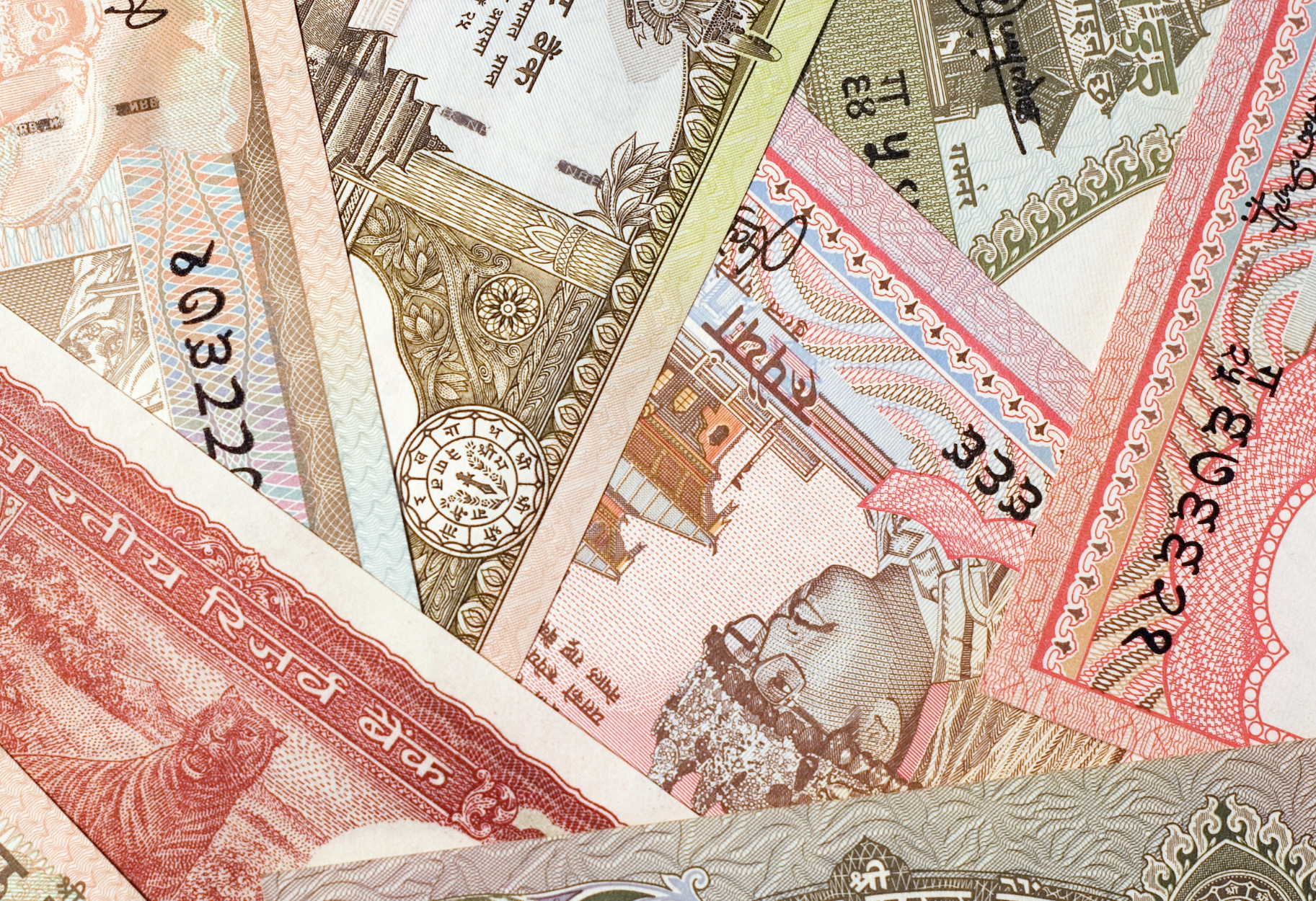
Nepal draws visitors from around the world with its breathtaking landscapes and a cultural history stretching back centuries. Before you set off, however, it's worth getting familiar with the country's financial system, where the Nepalese rupee plays a central role.
Keep in mind that before traveling to Nepal, you'll need to apply for your Nepal visa and meet all Nepal entry requirements. Check out our Nepal visa guide to find out which visa category is right for you.
What Is the Currency of Nepal?
The official currency of Nepal is the Nepalese rupee (NPR), divided into 100 paisa (p). Banknotes are available in denominations of 1, 2, 5, 10, 20, 25, 50, 100, 500, and 1,000 rupees; coins come in values of 1, 2, 5, and 10 rupees.
Foreign nationals are only allowed to leave Nepal with a maximum of 5,000 Nepalese rupees in cash. Any amount exceeding this limit must be declared at customs.
Make sure to exchange your Nepalese rupees before leaving the country, as this currency cannot be exchanged or used outside of Nepal.
Indian rupees are generally accepted in Nepal, but only in denominations up to 100 rupees, since higher-value Indian banknotes are banned in Nepal. Euros and US dollars are typically not accepted as payment in retail stores and must be exchanged for local currency beforehand.
Where Can You Exchange Money in Nepal?
You can obtain or exchange Nepalese rupees at the following locations:
- At the airport upon arrival.
- At ATMs.
- At local banks.
- At licensed currency exchange offices.
- Via credit or debit card.

ATMs in Nepal
ATMs are available in Nepal but can be difficult to find, especially outside major cities. Withdraw cash whenever you come across a working machine. Most ATMs are located in Kathmandu and Pokhara.
Himalayan Bank ATMs are known to be occasionally unreliable, and incorrectly charged amounts may not always be refunded. As a general rule, it's best to withdraw larger amounts in a single transaction rather than making multiple small withdrawals.
ATMs are also available along popular trekking routes, including Namche Bazaar and Jomsom. Withdrawal limits at these locations are typically between 10,000 and 20,000 rupees per transaction.
Banks and Currency Exchange Offices
The best option for exchanging money is through licensed banks in Nepal. They allow withdrawals of up to 35,000 rupees at a time, with lower fees than most other methods. Most banks charge a minimum fee of around $5 USD per transaction.
Government-approved currency exchange offices typically charge higher fees than bank ATMs. Use them only when no bank branch is nearby.
Credit and Debit Cards
In tourist-heavy areas such as Kathmandu, Pokhara, Chitwan, and the Everest region, Mastercard and Visa are widely accepted. Debit cards can occasionally cause issues, so it's a good idea to bring both a credit card and a debit card as backup.
Notify your bank before you leave that you'll be traveling to Nepal to prevent your card from being blocked. We also advise against bringing traveler's checks, as they are rarely accepted in Nepal.
In rural areas and villages off the beaten path, ATMs are often unavailable and card payments are not accepted. Always carry enough cash in small bills, and avoid openly showing your wallet during price negotiations.

Is Nepal Expensive for Tourists?
Nepal is considered one of the most affordable travel destinations in Asia. Travelers who opt for budget accommodations and local cuisine can keep costs very low. Only those planning a trekking expedition in the Himalayas should expect significantly higher expenses.
Here are some general daily budget estimates to help you plan:
- Budget travel (public transportation, local restaurants): around $15–$17 USD per day.
- Mid-range travel (rickshaw rides, sit-down restaurants, one or two beers in the evening): around $27–$33 USD per person per day.
Entrance fees to tourist attractions are either free or very affordable. Here are some typical prices in Nepal to give you a better idea of costs:
- Local meal: around $2 USD.
- Large beer: around $5 USD.
- Bottle of water: $1 to $2 USD.
- Lodge trekking: $165 to $220 USD per week.
- Camping trekking: $55 to $110 USD per week.
Is Tipping Expected in Nepal?
Tipping is customary in Nepal, especially in tourist areas, but it is not mandatory. Here are some general guidelines:
- Restaurant servers: 10 to 15% of the bill.
- Porters, bellhops, and taxi drivers: 20 to 30 NPR.
- Trekking guides and porters: approximately 15% of the total trip cost, handed over at the end of the trek.
- Hotel staff: 30 to 40 rupees per piece of luggage.
- Organized trekking guides: approximately $25 USD per person per week.
Always check your bill before paying, as some hotels and restaurants already include a service charge of around 10%. In those cases, an additional tip is not expected.
Bargaining is just as common as tipping in Nepal. At markets and souvenir shops, discounts of 30 to 40% are perfectly normal, so don't hesitate to negotiate.