
We know that dealing with a visa application can feel overwhelming. Here's everything you need to know about the B1/B2 visa for the United States, explained simply and without jargon.
You're eager to visit the United States. Maybe it's a dream trip, an important business meeting, or simply a chance to see someone you haven't seen in a while. The problem is that, depending on your passport, you may need to go through a process that raises a lot of questions before booking your flight: the B1/B2 visa. We'll walk you through everything, so you can head into your interview with no surprises.
What exactly is the B1/B2 visa?
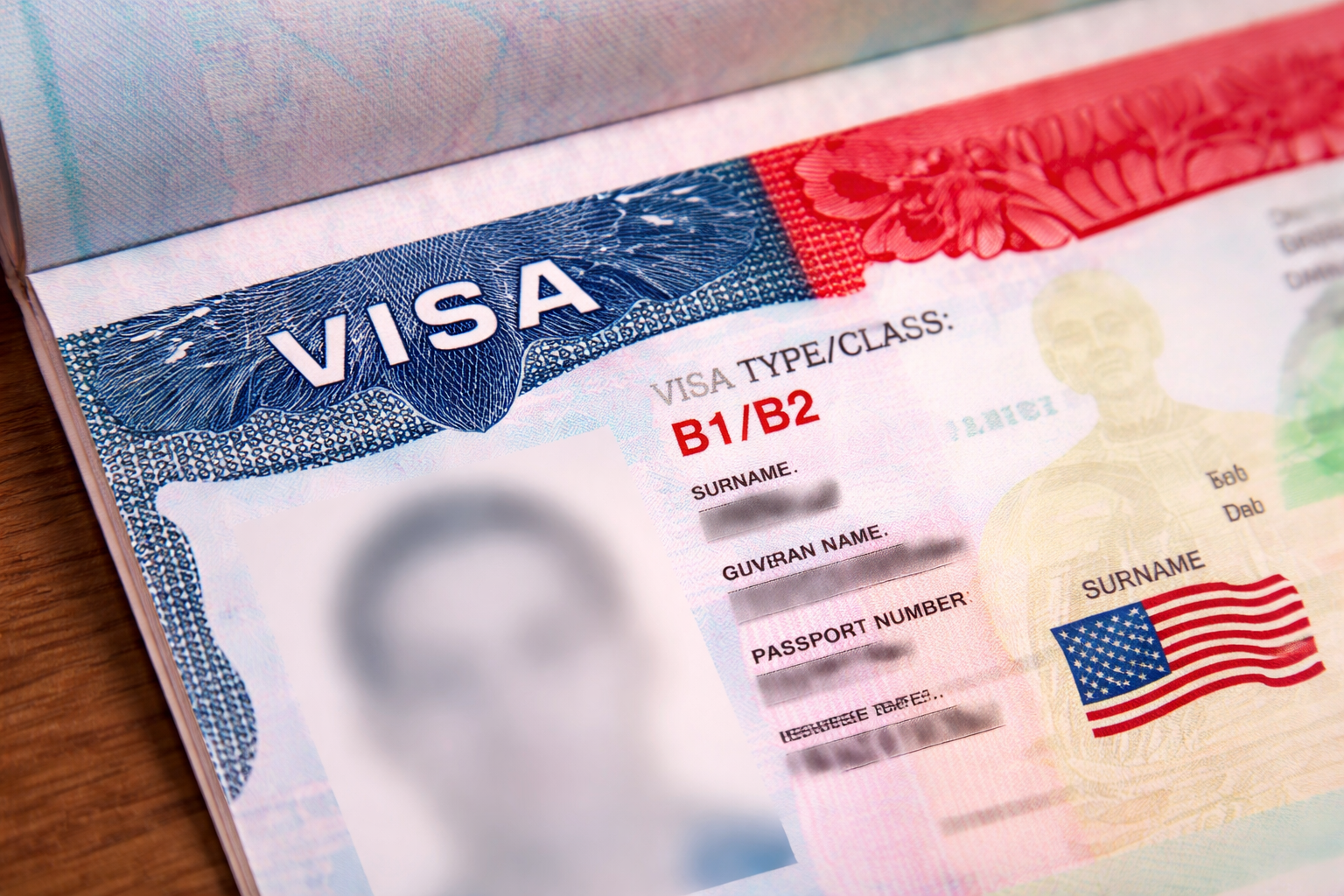
The B1/B2 visa is a non-immigrant visa that allows you to travel temporarily to the United States. In practice, it combines two permits in one: the B1 visa covers business activities and the B2 visa covers tourism, giving you a lot of flexibility to combine both purposes in a single trip.
- B1 visa (business): meetings, conferences, negotiations, or commercial activities.
- B2 visa (tourism): vacations, leisure travel, or visits to family and friends.
So if you're closing a deal and also want to spend a few days in New York, the B1/B2 visa has you covered.
Do I need the B1/B2 visa, or can I travel without one?
This is the first question everyone asks. The quick answer: it depends on your passport. If your country is part of the Visa Waiver Program (VWP), you can travel with an ESTA. If not, you will need a B1/B2 visa for the United States.
You will also need to apply for this visa even if your country is in the VWP if you have traveled to any of these countries:
- North Korea, Iran, Iraq, Libya, Somalia, Sudan, Syria, or Yemen on or after March 1, 2011.
- Cuba on or after January 12, 2021.
Pay attention to your passport type
Only ordinary passports are accepted. If you hold a diplomatic, official, or alternative travel document, you will not be able to apply for this visa with that document.
How long is the B1/B2 visa valid and how long can I stay?
Here's one of the best parts: in many cases, the B1/B2 visa is issued for up to 10 years. This means that if your interview goes well, you won't have to repeat the process for a long time. That said, it may also be issued for 5 years, 3 years, or less, depending on your nationality.
What you need to keep in mind
With an active visa, you can enter and exit the U.S. as many times as you want during its validity period, as long as your entry type allows it. However, each time you enter, the maximum stay is typically six months. The number of entries — single or multiple — also depends on your country of origin.
How much does the B1/B2 visa cost?
The official U.S. government fee for the B1/B2 visa is $185 USD. On top of that, you'll need to add processing fees and, in some cases, passport shipping costs.
Government fee
$185 USD + processing and shipping fees
The total cost varies depending on the shipping method you choose.
Why does my passport need to be sent?
When applying for the B1/B2 visa, you will attend an in-person interview at the embassy. If your application is approved, consular authorities will retain your passport for a few days to affix the visa inside. That's why we offer shipping options — so you can receive your passport back conveniently.
What shipping options are available to receive my passport?
After your interview and B1/B2 visa approval, we offer several convenient options for receiving your passport, although these may vary depending on your country of residence:
- Home delivery: delivered directly to your door.
- Pickup point: at a nearby, secure location.
- Consulate pickup: directly at the consular building.
Note: the total application price may vary depending on the shipping option you choose.
How long does the B1/B2 visa take to process?
This is probably the question that causes the most anxiety. Wait times can vary significantly, as the process has two distinct stages:
- Application processing
Completing and submitting the DS-160 form. We handle this part as soon as we receive your documentation, so it's usually the fastest step.
- The embassy appointment
This is where timing becomes less predictable. Depending on the country and current demand, the wait can range from one month to over a year. We always book the earliest available date for you.
What if I need to go to a VAC?
Some nationalities must first visit a Visa Application Center (VAC), where fingerprints and a photograph are taken before the embassy interview. This appointment is typically scheduled alongside the consular interview.
What documents do I need to apply for the B1/B2 visa?
Some documents are mandatory, while others, though not required, can make a real difference at your interview. Keep in mind that the exact requirements will depend on your personal situation.
Required — essential documents
- Valid passport (with at least 6 months of validity beyond your stay)
- DS-160 confirmation page
- Consular appointment confirmation
- Passport-style photograph
- Fee payment receipt
Recommended — documents that strengthen your application
- Accommodation details
- Proof of financial means
- Proof of ties to your home country (property, employment contract, family, etc.)
- U.S. travel history (last 5 years)
- Invitation letter (if applicable)
- Enrollment letter, proof of studies, or financial affidavit
Special situations to keep in mind
- Traveling for medical reasons: bring your medical records and confirmation of appointments with doctors in the U.S.
- You are retired: a pension certificate or proof of income will help demonstrate that you can fund your trip.
- You have traveled to the U.S. before: if your previous passport has entry stamps, it's recommended to bring it as well.
Practical tips for your embassy interview day
The consular interview is the most important moment of the entire process. Being well prepared will not only give you confidence, but can make a real difference in the outcome. Here are the key things to keep in mind before you show up.
Arrive on time, but not too early
Show up at your exact appointment time or with a very narrow margin. Arriving too early can work against you: some consulates and embassies do not allow entry before the assigned time, precisely to avoid crowding inside. Check in advance whether there are any specific instructions regarding arrival time.
Be ready for a security check
Before entering the building, you will go through a screening process similar to an airport: metal detector and, in some cases, a personal pat-down. This is standard procedure. Keep it in mind so you do not bring items that could cause unnecessary delays.
Dress appropriately
There is no official dress code, but the image you project to the consular officer matters. Go for neat, presentable clothing suitable for an official appointment: not overly casual, but not excessively formal either. A polished appearance conveys seriousness and can positively influence how the interview unfolds.
Only bring what is essential
Most embassies and consulates do not allow entry with backpacks, suitcases, bulky coats, or unnecessary items. Before going in, you will need to leave your belongings at a storage area, either inside the building or at a designated point nearby. What you should keep on you: your phone, the required printed documents, your photo, and your passport.

B1/B2 visa vs. ESTA: which one do I need?
This is a very common question. The key difference is that the ESTA is not a visa — it's an electronic travel authorization that is much faster and simpler to obtain. However, it's not available to everyone: only citizens of countries included in the Visa Waiver Program (VWP) can apply.
If your country is not part of this program, you will need the B1/B2 visa. And while the process takes longer, it has one clear advantage: you can stay up to six months per visit, compared to the 90 days allowed under the ESTA.
| Feature | B1/B2 Visa | ESTA |
|---|---|---|
| Interview required | Yes | No |
| Application | In-person + online | 100% online |
| Typical validity | Up to 10 years | 2 years (or until passport expiration) |
| Maximum stay | Up to 6 months/visit | 90 days/visit |
| Processing time | Weeks or months | Approx. 72 hours |
| Who is it for? | Countries outside the VWP | VWP countries |
Ready to start your B1/B2 visa application?
Tell us about your situation and we'll get to work. Leave the paperwork to us — you just focus on your trip.
Apply for your B1/B2 visa now!
