
Saudi Arabia is a country steeped in history, royal dynasties, and the birthplace of Islam. For decades it was one of the hardest destinations to visit in Western Asia, until late 2018 when the government launched a tourist visa for Saudi Arabia that opened the country to international tourism.
Since then, the kingdom has undergone a remarkable social transformation: women are no longer required to wear the traditional abaya, concerts and sporting events are now held, and tourist circuits have multiplied. Known as the desert kingdom, Saudi Arabia combines vast desert landscapes, monumental architecture, Red Sea beaches, and a millennia-old culture that surprises every traveler. Here is what you cannot miss.
Jeddah
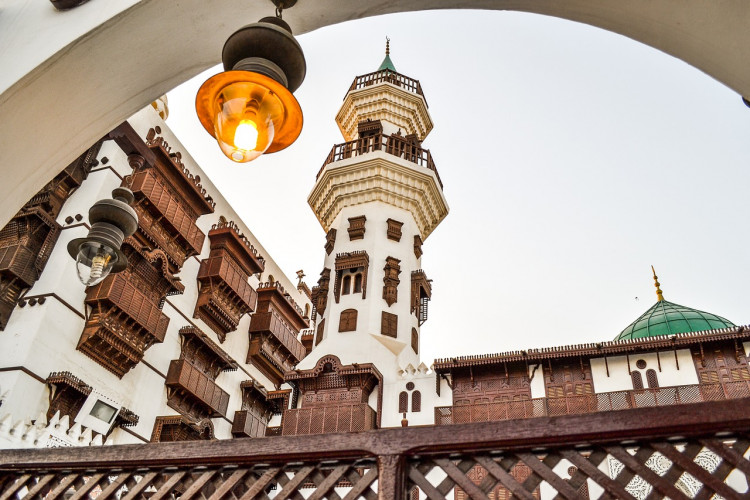
Jeddah is the most cosmopolitan and tourist-friendly city in the country, and the gateway to Mecca and Medina for the millions of pilgrims who arrive each year. Its blend of modernity and tradition makes it one of the essential stops on any trip to Saudi Arabia.
Among its attractions, the Jeddah Floating Mosque stands out built on pillars over the sea, its ivory white walls turn pink at night under hundreds of spotlights. Equally impressive is the King Fahd Fountain, the tallest in the world, capable of shooting saltwater more than 260 meters into the air. At night, lit by over 500 floodlights, it offers one of the most striking visual spectacles in the country.
Al-Ula
Al-Ula is one of the fastest-growing destinations on the international tourism radar and, without a doubt, one of the most breathtaking places to visit in Saudi Arabia. Located in the northwest of the country, this ancient oasis city is home to wind-sculpted sandstone landscapes, palm groves, and an exceptional archaeological heritage.
Its main attraction is Hegra, also known as Madain Saleh, the first site in Saudi Arabia to be declared a UNESCO World Heritage Site. The complex includes 131 Nabataean tombs carved directly into the rock, with facades of extraordinary architectural precision. It is the most impressive testament to Nabataean civilization outside of Petra and an unparalleled visit in the entire region.
Beyond Hegra, Al-Ula offers Elephant Rock, a natural rock formation shaped like an elephant that has become one of the country's most iconic photographic landmarks, and the old town, with its abandoned mud-brick houses that hold centuries of history.
Mecca
Located in a desert valley in the west of the country, Mecca is the holiest city in Islam and one of the most spiritually significant places on earth. Within it stands the Masjid al-Haram, the largest mosque in the world and a mandatory pilgrimage destination for every Muslim at least once in their lifetime.
Access to the interior of the mosque is reserved exclusively for practicing Muslims. Non-Muslim travelers can admire the magnificence of the complex from the outside and witness the devotion of the millions of pilgrims who visit each year, an experience that is in itself worth the journey.

Riyadh
The capital of Saudi Arabia is a city of contrasts where futuristic architecture coexists with a historic center steeped in tradition. Among its must-see attractions is the Masmak Fortress, a key site in the conquest of Saudi territory and the origin of the modern kingdom, now converted into a museum. Nearby stands the Al-Madi Mosque, built in red brick with an aesthetic unlike most mosques in the country.
The historic center of Riyadh, from the clock tower square to the Battah neighborhood, is a maze of streets lined with markets where you can find spices, fragrances, exotic vegetables, and local handicrafts. In contrast, the Kingdom Tower and the large shopping malls surrounding the city reflect the kingdom's most modern and ambitious face.
Diriyah
Just 15 minutes from downtown Riyadh lies Diriyah, the birthplace of the Al Saud dynasty and the cradle of the first Saudi state. Declared a UNESCO World Heritage Site, its historic At-Turaif district is a complex of 18th-century palaces and mud-brick buildings that offers a unique window into the origins of the kingdom.
In recent years, Diriyah has undergone an ambitious restoration that has turned it into one of the most important cultural projects in the country. Today it combines visits to its historic heritage with art galleries, restaurants, and cultural spaces, making it a perfect stop if Riyadh is your base.
The Farasan Islands
The Farasan Islands form an archipelago of 84 islands located in the Red Sea, off the southwestern coast of the country. Surrounded by one of the most extensive coral reefs in the region, these islands were once a strategic point on the trade route between Saudi Arabia and the Mediterranean. Today they are a nature and beach destination, ideal for diving and snorkeling enthusiasts, and one of the least crowded spots to visit in Saudi Arabia.
Abha and the Asir Province
Located in the southwest of the country, Abha is the green and cool counterpoint to the desert landscapes that dominate Saudi Arabia. Its misty mountains, mild climate, and refreshing breezes make it the favorite summer destination for many Saudis, and a genuine surprise for travelers who do not expect to find this kind of scenery in the country.
Asir National Park offers hiking trails, viewpoints, and outdoor activities in a natural setting that is little known to international tourists. The region also stands out for its traditional architecture in vivid colors, very different from the rest of the country, and its local markets where handicrafts and typical regional products can be found.
The Rub' al Khali Desert
The Rub' al Khali, known as the Empty Quarter, is the largest continuous sand desert in the world and one of the most awe-inspiring landscapes to see in Saudi Arabia. It covers the south of the country and extends into Yemen, Oman, and the United Arab Emirates, with dunes that can exceed 250 meters in height.
Visiting it requires some planning: the most common way is through an organized excursion from Riyadh or from one of the cities in the south of the country. The best time to venture into the desert is between November and February, when temperatures are more manageable. Spending a night under the stars in the middle of the Rub' al Khali is one of the most memorable experiences the country has to offer.
Ready to plan your trip? Apply for your Saudi Arabia visa with Visagov and travel without any surprises.