
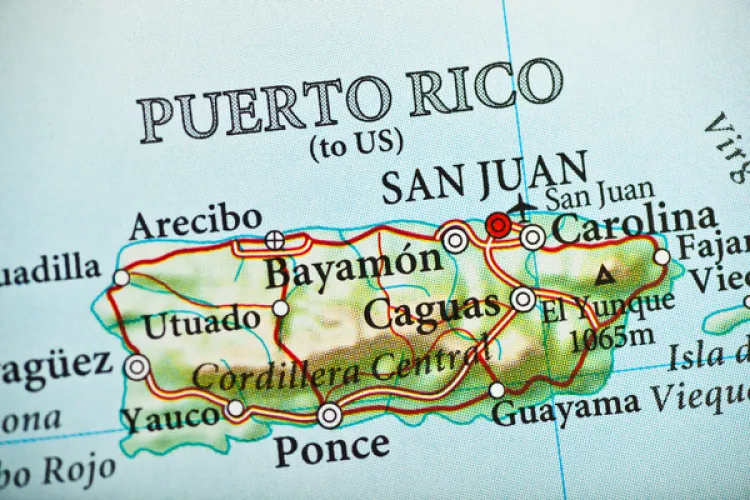
Puerto Rico has a very particular political and administrative situation. Its status as a United States territory — since Puerto Rico belongs to the United States — means that in many respects it follows the same rules as the mainland, and when it comes to entry requirements, the same rules apply as when entering US territory.
In this article, we will provide you with the information you need to meet all Puerto Rico entry requirements, explain what documentation you need to present, and share additional general information that will be useful for planning your trip to Puerto Rico.
From current health requirements to weather conditions and transportation options, this is a great starting point to get to know your destination and everything you need to travel to Puerto Rico.
Do you need a passport to travel to Puerto Rico?
The answer depends entirely on your citizenship and where you are flying from:
US Citizens (Domestic Flights)
If you are a US citizen traveling from the mainland (e.g., Miami, New York), you do NOT need a passport. Puerto Rico is a US territory and the flight is considered domestic.
- IMPORTANT: As of May 2025, you are required to present a REAL ID-compliant identification (marked with a star) to board domestic flights. If your driver's license is not REAL ID-compliant, you will need to use your passport as an alternative form of identification.
Foreign Nationals (International Travelers)
If you are traveling from Spain, Mexico, Colombia or any other country, you DO need a valid original passport with at least six months of validity remaining. Puerto Rico follows the same immigration laws as any US state.
Visas and ESTA Authorization
In addition to a passport, most foreign nationals need an entry permit:
- ESTA (Visa Waiver): For citizens of countries such as Spain, Chile, Andorra, or most of the European Union. It is a quick online process that allows stays of up to 90 days.
- 2026 Note: The official ESTA fee has recently been updated to $40.27 USD.
- 2026 Note: The official ESTA fee has recently been updated to $40.27 USD.
- B1/B2 Visa: If your country does not participate in the Visa Waiver Program (such as Mexico, Argentina, or Peru), you will need to apply for a traditional tourist visa at the US consulate.
Want to avoid mistakes in your application? At Visagov, we handle your ESTA for Puerto Rico professionally so you can focus on enjoying your trip.
Health Requirements and Vaccines: What Has Changed?
Unlike previous years, pandemic-related restrictions have largely disappeared:
- Routine vaccines: No vaccines are required. However, it is recommended that you are up to date on Hepatitis A, Tetanus, and, if you are traveling during peak season, Influenza to reduce the risk of complications such as pneumonia.
- Travel insurance: It is not legally required, but it is highly recommended. Healthcare in Puerto Rico carries the same high costs as on the US mainland. Basic coverage can save you thousands of dollars in the event of an unexpected incident.

Practical Tips for Your Arrival
- Currency: The US dollar (USD). Cards and mobile payments are accepted at 95% of businesses. However, we recommend carrying some cash at all times. Due to the island's unstable power grid, sudden outages can temporarily disable card payments, especially at local businesses or in areas outside San Juan.
- Customs: If you are traveling from abroad, you will go through US Customs and Border Protection (CBP). If you are flying from the US mainland, there is no immigration check, but there is a quick agricultural inspection to prevent the entry of prohibited plant or animal products.
- Weather: Puerto Rico has a tropical climate. Hurricane season runs from June through November; March is one of the best months to visit the island, with dry and pleasant weather.
