
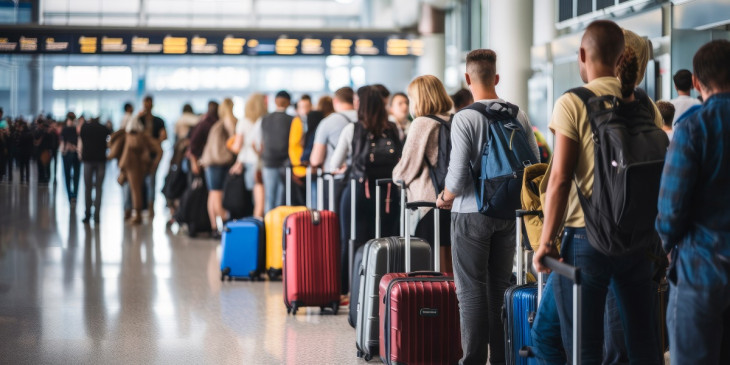
Ebola travel restrictions used to be something only a small group of travelers had to think about. That changed on November 3, 2026. Since then, every person boarding an international flight to the United States signs a statement confirming they haven't been in the Democratic Republic of the Congo (DRC) during the previous 21 days. That includes the business traveler on a London to New York red-eye who has never set foot in Africa, and the family flying in from Madrid for Thanksgiving.
The rule comes from the Centers for Disease Control and Prevention (CDC) and responds to the outbreak of Ebola caused by the Bundibugyo virus in the DRC. The CDC still rates the overall risk to the American public and to travelers as low. For most people, the declaration is one more step at check-in. For a smaller group, it's part of a set of rules that can keep them off the plane entirely, and below we sort out which group you're in.
What the CDC attestation form asks you to confirm
The CDC attestation form asks you to confirm one thing: that you haven't been physically present in the DRC at any point in the 21 days before boarding your flight to the US.
"Present" covers more than most people expect. Entering the country by air, land or sea counts. So does a layover at a DRC airport, even if you never left the plane. Flying over the DRC without landing doesn't count.
Who has to sign:
- Everyone on board. US citizens, US nationals and green card holders included, along with the crew.
- Connecting passengers. Changing planes in the US on the way to Canada or Mexico still means signing.
- Children. A parent, guardian or other authorized adult signs for anyone under 18.
The requirement applies only to air travel. Crossing into the US by land or arriving by sea isn't covered.
How the 21 days are counted
The CDC works in calendar days. The day you leave the DRC is Day 0, and the first full day outside the country is Day 1. You can board a flight to the US from Day 22 onward. Leave Kinshasa on November 10 and the earliest you can fly to the US is December 2.
Signing it at check-in: paper, app or a quick yes at the gate
There's nothing to download, print or fill in before you reach the airport. Airlines must provide the declaration and collect it before boarding, and each one chooses how:
- a paper form at the check-in desk
- a digital signature or a checkbox during online or app check-in
- a verbal confirmation, where the agent shows you the text, asks whether you've been in the DRC in the last 21 days and records your answer
One adult can complete it for the whole traveling party, although the airline still keeps a separate record for each person. The CDC publishes the form in English, Spanish and French, and airlines are allowed to offer their own translations.
Keeping a copy is optional. The airline holds on to every declaration for at least 42 days after the flight and hands it to the US government on request.
Two consequences are worth knowing before you sign. Skip the declaration and the airline won't let you board. And because it's a formal statement to the US government, knowingly giving false information can lead to criminal fines and prison.
Visagov Tip: Run through check-in in your airline's app the day before you fly. If the declaration is built into it, you'll find it there instead of meeting it for the first time at the gate.
Ebola outbreak 2026 travel restrictions by traveler type
The declaration sits on top of other CDC measures that have been in place since May. Which one affects you depends on where you've been and which passport you hold.
| Where you've been in the last 21 days | US citizens and US nationals | Everyone else, green card holders included |
|---|---|---|
| The DRC, even a layover | No boarding until Day 22 | No boarding until Day 22 |
| Uganda or South Sudan | Flight routed to IAD, ATL or JFK for screening | Entry to the US suspended until Day 22 |
| None of the three | Sign the declaration and fly | Sign the declaration and fly |
Stops count here too. A plane that touched down in Uganda or South Sudan puts you in the middle row, even if you stayed in your seat.
The Uganda travel ban and its 30-day renewals
The Uganda travel ban is a separate order from the declaration, and it works differently. It applies to non-US citizens, green card holders included, who were in Uganda, South Sudan or the DRC during the 21 days before arriving in the US. The CDC has renewed it roughly once a month since June. The current renewal was issued on October 11, 2026 and runs for 30 days, which puts its next review around November 10. If your trip includes Uganda, check the order's status close to your travel date.
Ebola airport screening at Dulles, Atlanta and JFK
US citizens and nationals coming back from Uganda or South Sudan can still fly home, but their travel is routed through one of three airports: Washington Dulles (IAD), Atlanta (ATL) or New York JFK. If your booking lands somewhere else, your airline should help you rebook.
Ebola airport screening adds a stop between the plane and the exit:
- Staff escort you to a screening area.
- You fill in a brief questionnaire about your travel and any symptoms.
- Your temperature is taken and CDC staff watch for signs of illness.
- You're enrolled in CDC text messages reminding you to monitor your health until 21 days have passed since you left.
Most travelers without symptoms carry on to their final destination afterward. Anyone with a fever or other symptoms gets an additional medical evaluation. And if you left those countries more than 21 days before your flight, you skip screening altogether.
Does an ESTA or a US visa change anything?
No, and the two get mixed up a lot. Your ESTA or US visa decides whether you're allowed to travel to the United States at all. The health declaration is a separate check that your airline runs for the CDC, and it applies whatever document you hold.
That works in both directions. An approved ESTA doesn't let you skip the declaration, and it doesn't override the entry ban for someone recently in Uganda, South Sudan or the DRC. The declaration, for its part, doesn't replace your travel authorization. Citizens of Visa Waiver Program countries still need an approved ESTA application before they fly.
If you aren't eligible for ESTA, you'll need a B1/B2 visa for tourism or business trips. Our guide to the B1/B2 visa walks through the whole process.
At Visagov, we take care of the paperwork side. With our ESTA USA service, you complete one simplified online form and our experts check it before it goes in. The declaration is the one step nobody can do for you in advance, because your airline collects it at check-in.
How long will the US Ebola travel ban last?
The declaration comes with an end date. The CDC order stays in force until December 18, 2026, unless the CDC lifts or changes it sooner. Any extension will depend on how the outbreak develops, including case numbers, geographic spread and how well it's being contained.
The figures explain why the CDC acted. As of October 18, 2026, the DRC had reported 9,455 confirmed cases and 4,561 deaths across eight provinces, according to the CDC order. According to press reports, the case count had passed 10,200 by October 27.
For anyone following the Ebola outbreak from the USA, the CDC's assessment hasn't moved: the overall risk to the public and to travelers remains low. The declaration and the US Ebola travel ban on recent DRC visitors are designed to keep it that way.
Ebola attestation FAQs
Do I have to sign if I've never been to Africa?
Yes. Every passenger on an international flight to the US signs, wherever the trip started. If you haven't been to the DRC, it's a single confirmation.
I'm only connecting in the US. Does it apply to me?
Yes. Connecting passengers sign too, even if they never leave the airport.
Does a flight from Puerto Rico count?
No. Puerto Rico, Guam, the US Virgin Islands, American Samoa and the Northern Mariana Islands aren't foreign countries under the order, so a flight from San Juan to Miami doesn't need the declaration. A flight from abroad into San Juan does.
Can I sign for my kids?
Yes. A parent, guardian or other authorized adult signs for travelers under 18, and one adult can complete it for the whole group.
Are there any exemptions?
Very few. The CDC can grant an exemption on humanitarian or important government grounds, such as a medical evacuation, and these are rare.
Planning a US trip in the next few weeks
If you were in the DRC recently, count forward to Day 22 before you book anything. That date decides when you can fly. If you weren't, the declaration won't slow you down, and the document that still needs your attention before departure is your travel authorization.
