
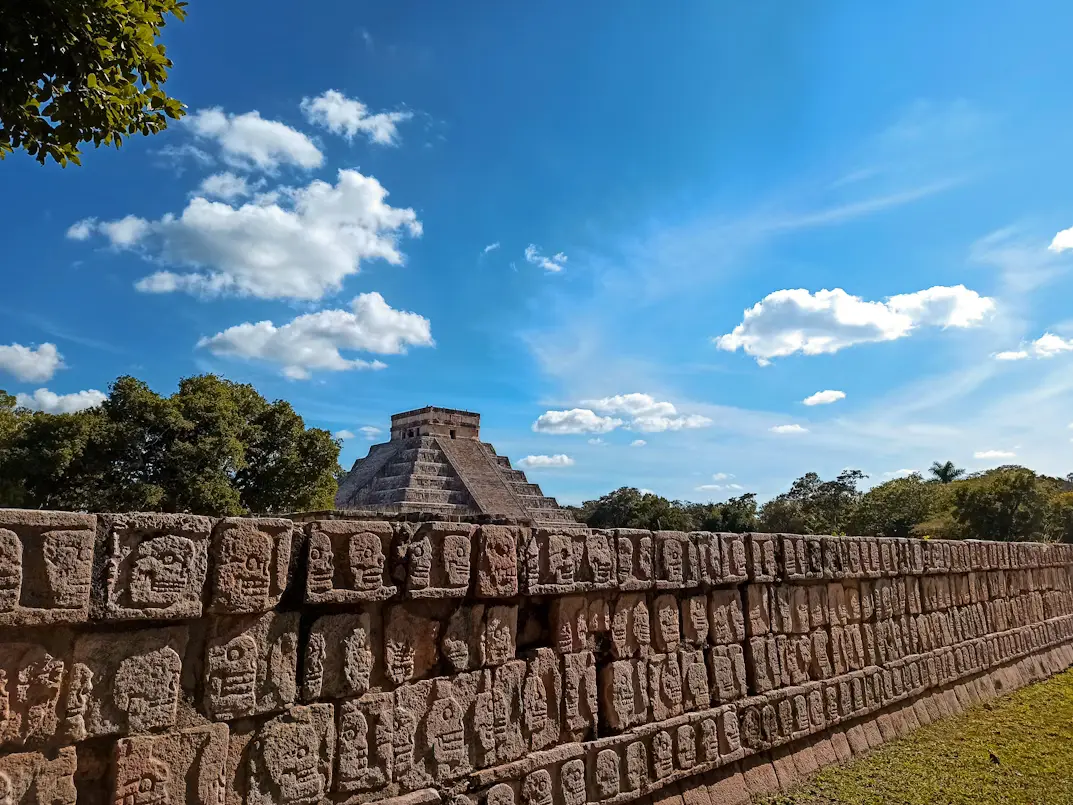
UNESCO World Heritage Sites are the way UNESCO recognizes that a place holds outstanding universal value. This value can be natural, such as valleys, mountains, lakes, or unique ecosystems, or cultural and historical, such as monuments, structures, and settlements of significance to humanity.
Mexico has exceptional cultural wealth, inherited from both pre-Hispanic civilizations and the Spanish colonial period. Today, around 52 indigenous peoples continue to live as direct successors of those societies. One of the great historical points of interest is its Maya culture: a Mesoamerican civilization that flourished for more than two millennia and left a deep mark on writing, art, architecture, astronomy, and mathematics.
For all these reasons, UNESCO has designated 35 World Heritage Sites in Mexico. Below we highlight the most remarkable ones that you should not miss if you are planning to travel to Mexico.
Islands and Protected Areas of the Gulf of California
Located in northwestern Mexico, this natural site encompasses 244 registered points across coastal zones, islands, and islets. The Sea of Cortez and the surrounding archipelagos make up one of the world's most important natural laboratories for studying the evolution of oceanic and coastal species.
The area is home to 695 plant species and 891 fish species, 90 of which are endemic. Its most striking statistic: it contains 33% of the world's total marine mammal species. This ecosystem is currently endangered, making a visit all the more worthwhile.
Historic Center of Mexico City and Xochimilco
Inscribed by UNESCO in 1987, this cultural site is located 28 kilometers from the capital's city center. It was built by the Spanish in the 16th century on the ancient Aztec capital of Tenochtitlán, today one of the largest and most populous metropolises in the world.
The historic center covers just over 10 square kilometers made up of 669 city blocks, where the remains of five Aztec temples and more than 1,000 historic and artistic buildings are preserved. Among them stands out the Metropolitan Cathedral, the largest in the Americas. The canals and chinampas of Xochimilco, meanwhile, transport visitors directly into pre-Hispanic everyday life.
Historic Center of Zacatecas
Declared a World Heritage Site in 1993, the historic center of Zacatecas also includes part of the Camino Real de Tierra Adentro. The city was founded in 1546 following the discovery of rich silver mines that drove its prosperity, reaching its peak splendor during the 16th and 17th centuries.
Built on the vertical walls of a narrow valley, it offers spectacular views from every vantage point. At its heart stands the Baroque cathedral, built between 1730 and 1760, with a façade that harmoniously combines European and indigenous decorative elements. Other points of interest include the Plaza de Armas, the Government Palace, the Cubo Aqueduct, and the Teatro Calderón.
Historic Fortified City of Campeche
A Caribbean port city of colonial origin, Campeche was inscribed as a World Heritage Site in 1999. Its historic center preserves much of the walls and fortification system built to withstand the naval attacks it faced due to its strategic position in maritime trade.
Within the walled enclosure, the city is laid out with symmetrical streets lined with churches, plazas, and colonial mansions. In 1893, part of the wall was demolished to open up views of the sea, and the main plaza was converted into a public garden, creating one of the most photographed spaces in southeastern Mexico.

Monarch Butterfly Biosphere Reserve
Located in the state of Michoacán, in the west of the State of Mexico, this reserve covers an area of 57,259 hectares designated by UNESCO. It was created to protect the overwintering habitat of the monarch butterfly, one of the most spectacular migratory phenomena on the planet.
Every year, millions of butterflies travel thousands of miles to reach these forests, where they overwinter to build up the fat reserves they will need for the return journey. Witnessing this phenomenon in person is a one-of-a-kind experience that makes the trip worthwhile on its own.
To preserve this ecosystem and avoid disrupting the butterflies' overwintering state, a mandatory code of conduct applies to all visitors:
- Follow the instructions of local guides at all times.
- Stay exclusively on designated trails.
- Do not bring food, alcoholic beverages, sharp objects, firearms, or pets into the sanctuaries.
- Do not remove plants, animals, fungi, or any other elements from the forest.
- Do not smoke or light fires.
- Respect the access limits to monarch butterfly colonies.
- Maintain silence throughout the visit.
- Do not use flash photography.
- Do not disturb, touch, or take monarch butterflies.
- Limit your stay to a maximum of 18 minutes inside the sanctuary.

If you are planning to visit any of these places, remember that you will need to arrange your entry documents before traveling. Check out our guide on how to apply for a Mexico visa to get your FMM or any other required visa. Find out whether you need a visa for Mexico or just the FMM based on your nationality, and complete your entry permit application easily online.