
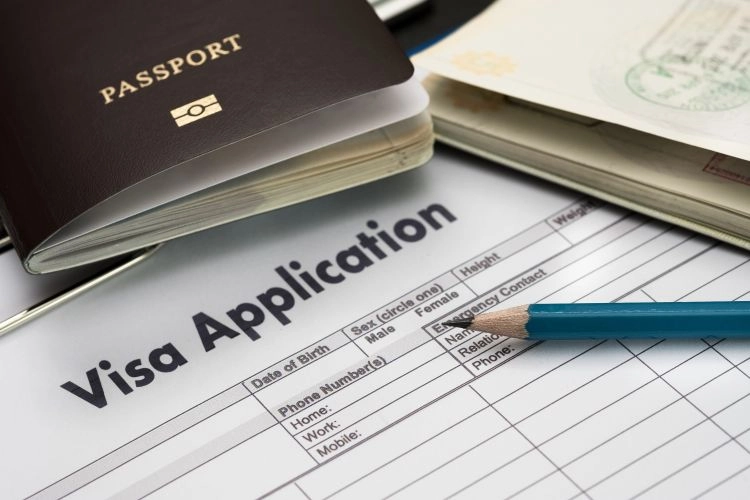
Planning a trip abroad is exciting, but the success of the adventure depends on a fundamental step: having documentation in order.
A visa is much more than a stamp in a passport; it is the official permission that opens the doors to a country depending on what will be done there, whether enjoying a vacation, studying, or working. With advances in technology, many destinations now offer an online visa or eVisa, a much faster and more convenient process that makes it possible to manage everything from home in just a few days.
This guide clearly and simply explains everything that needs to be known: from the different types of visas that exist and the basic documents that will be requested, to how to correctly distinguish a visa from a passport. The aim is for the only concern to be enjoying the trip, which is why all the updated information needed to obtain the permit with complete security and confidence is provided here.
Why is a travel visa needed?
A travel visa is the official authorization that allows legal entry into a foreign country for a specific period, functioning as an essential mechanism for governments to regulate and securely oversee migratory flows at their borders. Obtaining this document ensures that the stay complies with current international regulations, facilitating efficient immigration control both upon entry and upon exit from the territory.

Classification of visas by length of stay
- Short-stay visas: These are designed for limited stays that, as a general rule, do not exceed 90 days. They are the most common authorizations for tourism purposes, business matters, or international transit stopovers.
- Long-stay visas: These allow the traveler to remain in the destination country for periods longer than three months. Processing is required for residence plans, employment contracts, or large-scale academic programs.
What are the most common types of visas?
- Tourist Visa: Authorizes entry exclusively for leisure and recreation for a limited period. Under this category, undertaking any paid or commercial activity in the destination country is strictly prohibited.
- Work Visa: Authorizes the holder to carry out professional or commercial activities. It generally requires sponsorship by a local employer, and its validity varies depending on the contract or the nature of the work to be performed.
- Business Visa: Allows attendance at meetings, trade fairs, or contract signings without joining the local labor market. The main requirement is demonstrating that financial remuneration comes from an entity outside the visited country.
- Student Visa: Intended for foreign nationals seeking to undertake academic programs, research, or specializations at accredited educational institutions in the destination country.
- Transit Visa: Required for technical stopovers or transport changes in certain territories. Its validity is extremely short (from a few hours to days), and whether it is mandatory depends on immigration agreements between the traveler’s nationality and the stopover country.
- Multiple-Entry Visa: Provides the flexibility to enter and leave the country on multiple occasions during the visa’s validity. It is the ideal option for dynamic itineraries, as it avoids the need to apply for new authorizations for each entry.
Essential requirements and documentation for visa applications
Documentary requirements are subject to constant updates depending on the destination country, the applicant’s nationality, and the required visa category. For this reason, the specialized service rigorously supervises each file to ensure that documentation complies with current official standards.
In general terms, the essential elements to begin any process are:
- Valid passport: With a minimum validity of six months from the planned date of entry into the destination country.
- Form: Complete declaration of personal data and specific details of the travel itinerary.
- Recent photograph: Meeting the biometric and format parameters required by immigration authorities.
Depending on the regulations of each territory, additional supporting documents may be required, such as letters of invitation, proof of accommodation, or flight reservations, as well as the availability of specific blank pages in the passport for the stamping of official seals or labels.

How difficult is it to obtain a travel visa?
The difficulty of obtaining travel authorization varies significantly depending on each destination’s immigration policies. Countries with stricter regulations, such as China, Russia, or Saudi Arabia, often involve complex bureaucracy that includes the requirement for detailed technical documentation, mandatory consular interviews, or specific restrictions depending on the applicant’s nationality. These processes may be arduous and lengthy if they are not handled with the required precision.
However, a complex procedure does not have to be an obstacle. With appropriate expert preparation, the application process is dramatically simplified, eliminating margins of error and unexpected inconveniences. At Visagov, each stage of processing is optimized to be fast and efficient: the team handles liaison with government agencies and the technical verification of documentation, allowing the administrative burden and any negative surprises during the process to be avoided.
How and where can a travel visa be obtained?
There are two main ways to manage a travel authorization, depending on the destination country’s regulations and the applicant’s profile:
- Consular processing (in person): In cases where regulations require physical attendance, the process must be completed at the relevant embassy or consulate. This process requires thorough prior research on fees, technical documentation, and processing times, which are usually longer. Initiating these procedures several months in advance is essential, calculating the start date precisely so that the visa’s validity matches the travel itinerary.
- Digital processing (eVisa): Currently, the online route represents the most agile and straightforward alternative. By digitizing the process, the traveler only needs to upload documentation and, after a validation period that usually ranges from a few days to two weeks, approval is received directly by email. Initiating this application with a buffer of 15 to 20 days is usually sufficient to ensure smooth processing, provided that the information submitted is professionally verified.
Regardless of the channel, Visagov’s specialized support ensures that the application complies with current requirements, optimizing response times and minimizing the risk of refusal due to errors in the form or in the attached documentation.
Is it possible for a travel visa to be rejected?
Yes, there is a possibility that an application may be refused. In such cases, the consular authority or the eVisa processing platform issues an official notification specifying the reason for the refusal, based on the applicable immigration regulations. If the process is completed through Visagov, the team immediately analyzes that report in order to explain in detail the technical or administrative reasons that led to the decision.
After a refusal, the steps to follow are usually:
- Appeal: Depending on the destination and the type of visa, submitting an appeal may be possible in order to challenge the decision, providing additional evidence to address the authority’s concerns (such as new financial guarantees or clarifications about the purpose of travel).
- New application: If an appeal is not viable, the process must be started from scratch. This involves a comprehensive review of the file to correct previous errors and payment of the corresponding government fees, as these are not usually refundable after a refusal.
Receiving professional advice before the first application is the best strategy to minimize these risks and avoid wasting time and financial resources.

Main reasons for visa refusals
There are multiple factors that may lead to an application being refused. Identifying and mitigating these common errors is essential to ensure a favorable outcome:
- Inconsistencies in biographical data: Errors in transcribing names, dates of birth, or passport numbers are recurring reasons for exclusion.
- Insufficient supporting documentation: Failing to provide a detailed itinerary, omitting confirmed entry and exit dates, or providing incomplete contact and accommodation details generates distrust in the immigration authority.
- Deficiencies in attached files: Submitting blurry images, photographs that do not meet current biometric standards, or using simple copies when originals or certified documents are required.
- Incorrect visa classification: Applying for an immigration category that does not match the true purpose of travel (e.g., applying for a tourist visa for a professional activity).
- Immigration history and background: Omitting information about criminal records or having previously committed an overstay (remaining in a country longer than permitted) are direct grounds for refusal due to a lack of applicant integrity.
- Insufficient financial means: Failing to demonstrate sufficient funds to cover stay and return expenses, in accordance with the updated thresholds required by the destination country.
How does a visa differ from a passport?
Although both are international identity documents, their functions and legal nature are different:
- Passport (Identity and citizenship document): Issued by the traveler’s country of origin. Its main function is to certify the holder’s identity and nationality globally, and it is the essential base document for crossing any border. In addition, it guarantees the citizen’s right to re-enter the home country without restrictions. Its validity is usually long-term, generally set at periods of 5 or 10 years.
- Visa (Entry and stay authorization): A grant issued by the destination country. It represents the specific endorsement or permission linked to a passport to authorize the entry, transit, or stay of a foreign national for a specific purpose and period. Unlike a passport, whether it is required depends on bilateral agreements between nations; if a visa-waiver agreement exists, a visa is not required. Its validity is much more limited, usually expiring after a few months or once the permitted length of stay has been reached.
Is one document more important than the other?
It is not a matter of which is more useful, but rather that both are inseparable. A passport is the official identification document worldwide and, without it, applying for a visa is impossible, as a visa is directly linked to identity details.
A key point to remember is that a visa depends entirely on the passport. If the passport expires or is lost, the associated visa will automatically cease to be valid, even if months of validity remained. To travel without issues, both documents must always be valid and in order.
