
Kenya is one of the best safari destinations in the world: over 50 nature reserves, the Big Five in the wild, the Great Migration, and ancient tribes that coexist with wildlife make this country an experience that's hard to match. If you're planning your trip, this guide covers the must-visit national parks and everything you need to know to organize your Kenya safari.
Remember that to travel to Kenya you need to obtain the Kenya eTA before you leave. You can apply online in just a few minutes through Visagov.
The best national parks for a safari in Kenya
Kenya has a network of reserves and national parks that stretches from the savanna to the coast of the Indian Ocean. Here are the most outstanding:
Maasai Mara National Reserve
The Maasai Mara is Kenya's most famous reserve and one of the best safari destinations on the entire African continent. Located in the southwest of the country and connected to the Tanzanian Serengeti, its more than 1,500 km² are home to an exceptional concentration of wildlife.
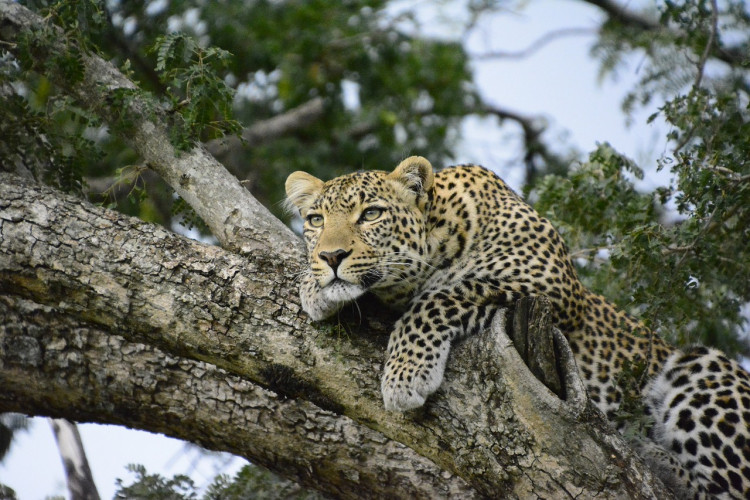
It is one of the few places in the world where you can see the Big Five in their natural habitat: lions, leopards, elephants, rhinoceroses, and buffaloes. But the most spectacular moment of the year is the Great Migration, when more than two million wildebeest and zebras cross the savanna in search of fresh pastures, in a spectacle recognized as one of the most impressive in nature.
Beyond the wildlife, the Maasai Mara is also the ideal place to learn about the culture of the Maasai tribe and, for photographers, one of the best locations in Africa for its light and species density.

Samburu National Reserve
Located in the north-central part of the country on the banks of the Ewaso Ngiro River, the Samburu Reserve covers about 160 km² and is home to the tribe of the same name. Less crowded than the Maasai Mara, it offers a quieter and more authentic experience.
Its landscape combines three types of savanna (wooded, flat, and shrubby), the result of the confluence of three parks: Buffalo Springs, Laikipia, and Shaba. In its lands it is possible to spot giraffes, buffaloes, zebras, gazelles, impalas, elephants, cheetahs, leopards, lions, and hippos, among other species.
Lake Nakuru National Park
The third most visited park in Kenya and the most famous in the Rift Valley is known primarily for the thousands of flamingos that tinge the shores of the lake pink. Storks, white pelicans, marabou storks, and African cormorants complete a unique ornithological spectacle.
With about 200 km² in area, the park also shelters endangered species under protection, such as the Rothschild giraffe. It is also one of the best places in Africa to spot the white rhino and the black rhino, along with buffaloes, zebras, baboons, lions, and cheetahs.
Hell's Gate National Park
Hell's Gate is the park that inspired the landscapes of The Lion King and has served as a setting for several film productions. Its imposing gorges, canyons, rock towers, and cliffs over 1,900 meters high make it one of the most visually spectacular parks in Kenya, despite its relatively small area of about 70 km².
Unlike other parks, Hell's Gate allows visitors to explore it on foot or by bike, making it a different and more immersive nature experience. Its wildlife includes vultures, warthogs, buffaloes, giraffes, hyenas, monkeys, lions, and cheetahs.
Amboseli National Park
With nearly 39,000 hectares at the foot of Kilimanjaro, Amboseli National Park offers one of the most iconic images in Africa: herds of wild elephants with Mount Kilimanjaro (19,341 ft) in the background. When the mountain emerges through the mist at sunrise, the landscape takes on an almost mystical quality.
Its proximity to Nairobi (about 4 hours) makes it particularly accessible for those who want to make the most of their safari days. In addition to elephants, Amboseli is home to lions, cheetahs, hyenas, giraffes, impalas, oryx, zebras, ostriches, and hundreds of bird species.


What is the Great Migration?
The Great Migration is one of the most impressive natural spectacles on the planet and occurs exclusively between Tanzania and Kenya. Every year, more than two million wildebeest, antelopes, and zebras travel the corridor connecting the Serengeti to the Maasai Mara in search of pasture and water during the dry season.
The movement also activates the great predators: lions, cheetahs, and crocodiles take advantage of the massive animal crossing to hunt. The crossing of the Mara River, in particular, is one of the most sought-after moments for photographers and nature lovers from around the world.
The exact date varies each year depending on rainfall, so it's worth researching in advance. In general, the most spectacular period in the Maasai Mara falls between July and October.
What is the best time to go on a safari in Kenya?
The best time for a safari in Kenya is the dry season, from June to October. With less vegetation, animals congregate around water sources and are easier to spot. July and October also coincide with the Great Migration in the Maasai Mara, making them the most in-demand months.
From January to February there is a shorter dry season that is also favorable for safaris, with fewer tourists and lower prices. The rainy season (from March to May and in November) has its advantages: the landscape is greener, there are newborns, and visitor numbers are lower.

Organized safari or independent travel?
One of the first decisions when planning a safari in Kenya is whether to go with an agency or travel independently. Both options have their advantages, and the choice depends mainly on your travel experience and the level of comfort you're looking for.
Safari with an agency or local guide
Traveling with a guide who knows the terrain well considerably increases the chances of spotting animals safely. Local guides know where the animals are in each season, how to approach them without disturbing them, and which routes to avoid. Many specialized European agencies work directly with Kenyan operators, which allows you to plan your safari precisely and only have to book your flights.
Agencies offer both pre-set itineraries and custom-tailored safaris depending on budget and preferences. If this is your first safari, this is the most recommended option.
Independent safari
If you prefer adventuring on your own, it is perfectly possible to organize your own safari in Kenya. You'll need to rent a 4x4 vehicle capable of handling the savanna tracks, and keep in mind that in Kenya driving is on the left. Book your accommodation in advance based on the route you've chosen.
A very popular option is stilted lodges next to watering holes, where animals come to drink. From the terrace you can watch buffaloes, zebras, and elephants without ever having to leave your accommodation.

What to pack for the safari
The right gear makes the difference between an uncomfortable safari and a memorable experience. Here are the essentials:
Photography and observation
In most national parks you are not allowed to get out of the vehicle, so a powerful zoom lens is essential for getting good photos. Binoculars are also indispensable for observing animals at a distance, especially birds and more elusive species.
A good field guide to the local wildlife will help you identify less well-known species like the dik-dik, the greater kudu, or the topi, which can easily go unnoticed without a reference.
Clothing and protection
During the dry season temperatures range between 86 and 95°F, so opt for lightweight clothing in neutral colors (beige, olive green, brown) that won't startle the animals. Long pants are essential to protect yourself from tall grass and bushes. Don't forget a hat, sunglasses, and high-SPF sunscreen.
If you travel during the dry season, you'll encounter few mosquitoes during the day. Even so, lodges are equipped with mosquito nets and it's a good idea to bring repellent for the early morning and evening hours, when insect activity is higher.
Safety during the safari
Kenya's national parks are safe environments with strict control measures. If you travel with a guide, they will accompany you from lodge to lodge and from park to park, ensuring your safety at all times. That said, there are some basic rules worth keeping in mind:
- Don't leave the vehicle inside the parks except in designated areas.
- Don't leave the lodge alone at night: wildlife may be very close by.
- Avoid the border area with Somalia, where there is a risk of terrorism.
- In cities, don't display valuables or jewelry and avoid walking alone at night.
- Stay away from protests and political gatherings.
Administrative preparation: visa, currency, and insurance
Before you leave, make sure your documents and essential preparations are in order:
Kenya eTA
To enter Kenya you need the eTA (Electronic Travel Authorisation), an electronic authorization that replaces the traditional visa and is processed entirely online. You can apply through Visagov in just a few minutes: fill out the form, attach the documents, and you'll receive the decision by email in approximately 72 hours. Apply at least 3 days before your travel date.
Currency
The official currency is the Kenyan shilling (KES), although the US dollar is also accepted in tourist areas. You can withdraw cash from ATMs in major cities or exchange foreign currency at banks and exchange offices. Always carry some cash, especially if you plan to visit rural areas or more remote parks.
Travel insurance
Insurance is not mandatory, but it is strongly recommended. A policy covering medical assistance and repatriation is especially important in a country where healthcare infrastructure outside major cities can be limited, and where a medical evacuation can be extremely costly.

Why go on a safari in Kenya?
Kenya ranks among the top two safari destinations in the world for reasons that go well beyond its wildlife. Here are the main ones:
- It is possible to observe wildlife year-round, without depending on a specific season as is the case in other destinations.
- It is home to the Great Migration, a phenomenon that can only be witnessed in Kenya and Tanzania.
- Several indigenous tribes such as the Maasai and the Samburu coexist with wildlife, allowing visitors to combine safari with unique cultural experiences.
- It is one of the few countries in the world where you can take a hot air balloon safari over the Maasai Mara.
- As an established destination, the range of accommodations, operators, and excursions is wide and available for all budgets.
To travel to Kenya you need the Kenya eTA, an electronic authorization you can process online through Visagov in just a few minutes before your trip.